True Classic Ad Examples
Browse 49 True Classic ads ad examples sourced from high-performing campaigns. Clone any design, swap in your product, and get a finished ad in seconds.
Updated September 2026
True Classic built a half-billion-dollar apparel brand on one observation — most men's t-shirt ads use six-pack models, but most men don't have six-packs. Founder Ryan Bartlett put regular-bodied guys in the ads, priced shirts at $25-30, and ran aggressive before-after fit comparisons. Creative looks almost comically direct next to Lululemon or Ralph Lauren.
Their ad system stays ruthless about one message: the shirt fits better than the one you're wearing. Every ad is a fit comparison — a baggy shirt on the left, a True Classic on the right, same guy both frames. Palette is simple: navy blue, cream, warm earth tones, and occasional olive. Typography is chunky and direct, often with the price ($25, $29.99) front and center. Models run average-height, average-build — dads, office workers, guys with a gut. Facebook and Instagram carry the heavy rotation, with YouTube running testimonial spots where customers hold up their old shirt next to the new one.
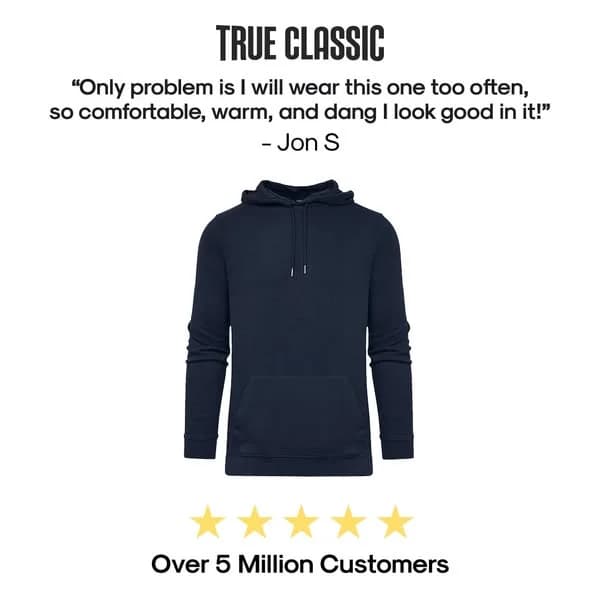
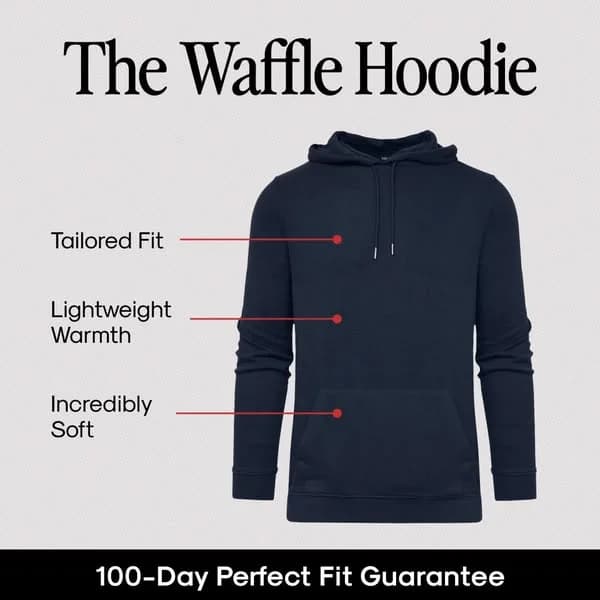
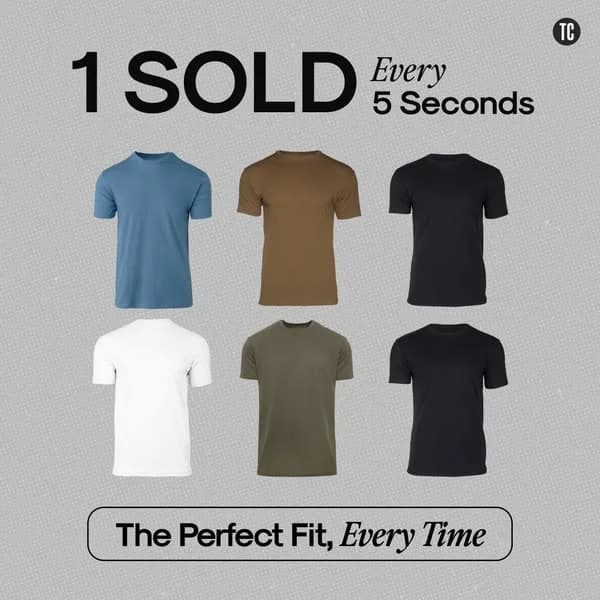
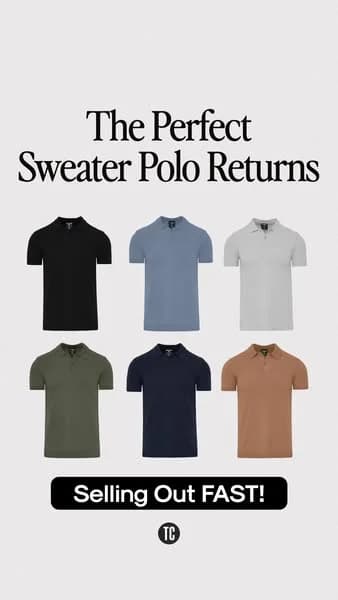
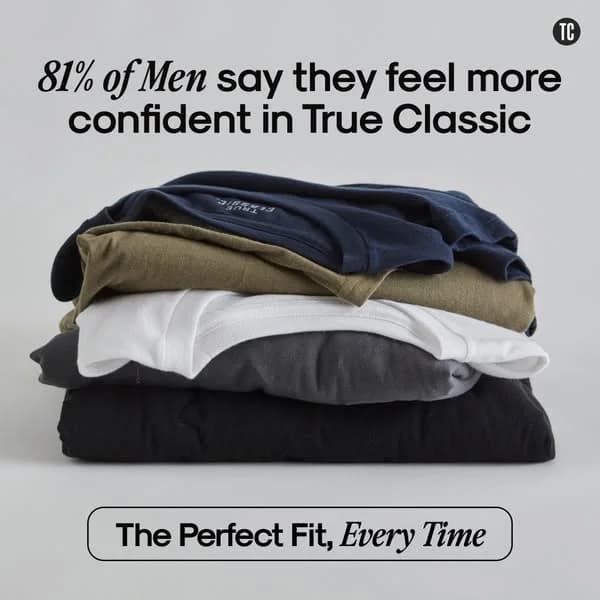
Our True Classic ad examples collection captures fit comparisons, price-forward statics, and testimonial carousels the brand runs. Filter by format to find the split-screen dad-bod comparisons, the price-in-headline statics, and the UGC unboxing videos that repeat across Facebook placements. Annotations point out how the cream backgrounds stay neutral, where the price number sits, and how the posing matches across before and after frames.
 Why Clone Ads
What Makes True Classic Ads Convert
Put the price in the headline, not the footer
True Classic ads regularly lead with "$29 t-shirt that fits" — the price is the hook, not a footnote. Brands priced sharper than the category average should lead with the number. Most apparel brands bury the price because they're ashamed of it. If you're cheaper and the product holds up, the price is the best copy you have.
Cast the customer, not the model
True Classic uses average-bodied men in ads because that's the customer. Six-pack models work for aspiration categories like fitness apparel. They fail for comfort categories like everyday t-shirts. If your buyer is a 35-year-old dad with a gut, a 22-year-old fitness model in the ad creates a believability gap that drops CTR.
Before-after fit comparisons outperform lifestyle shots
True Classic's highest-performing ads run as side-by-side fit comparisons — old shirt vs True Classic on the same guy. It's the apparel version of Nutrafol's hair transformations. Any product where fit or outcome differs from the competitor should show the difference in the frame. Lifestyle shots are pretty; comparisons convert.
True Classic ads work because they cast the actual customer — average-bodied men in their 30s and 40s — rather than the fitness model apparel brands default to. Before-after fit comparisons give shoppers a concrete reason to believe the product performs differently than what's in their closet. Prices ($25-30) sit in the headline, not buried at the bottom, which signals confidence rather than shame. Whole system is built to kill the "that shirt won't fit me" objection before it forms.
Navy blue, cream, warm beige, and olive dominate. Backgrounds run flat cream or soft gray — no busy lifestyle environments. Models shoot against neutral walls or simple interiors, which keeps focus on shirt fit rather than scene. Typography stays bold, chunky sans-serif, with prices in large numerals. Overall palette reads approachable masculine — not the chrome-and-black of performance apparel, not the pastel of DTC beauty.
Men 30-55 with average build who've given up on department store shirts because the fit is wrong — shoulders too wide, torso too long, sleeves too short. Price-sensitive buyers who think a Ralph Lauren polo shouldn't cost $95. Ads specifically exclude the fitness-model aesthetic and speak to the dad bod, the desk-job body, the guy who wants to look sharp at a barbecue without pretending to be shredded.
Fit comparisons run as their signature creative. A customer stands in a before shot wearing a baggy Hanes or department store shirt, then an after shot in the same pose wearing True Classic. Same guy, same angle, different shirt. Sometimes a side-by-side static, sometimes a quick-cut video. Comparison kills the "my old shirt is fine" objection faster than any copy could. Any apparel brand can borrow this directly.
Facebook and Instagram carry the heaviest spend — the fit-comparison format reads well in feed, and the 30-55 male demo still lives on Meta platforms. YouTube pre-roll runs longer testimonial spots with customers holding up their old shirt on camera. TikTok creative is growing with UGC-style unboxings and "which shirt fits better" polls. Pinterest and Snapchat run limited, mostly retargeting.
Create Your Own
True Classic Ad
Clone any true classic ad example. Upload your product photo. Seconds later, you have a finished ad ready to launch.
Create your ad