How to advertise an app in 2026: channels, costs, examples


Consumers spent $167 billion in apps in 2025, spread across more than 4 million apps. Getting found in that pile is not a budget problem. As far back as a 2016 Adjust study, roughly 91% of apps appeared on no top chart at all. So the real question behind how to advertise an app comes down to order, not channel choice — plus the one lever almost everyone skips: the creative, where the top 2% of ads drive 43% of app ad spend (AppsFlyer's 2025 creative report).
Most guides on how to promote an app hand you a channel list. This one hands you a sequence — fix the listing, seed organic, buy installs only when the math works — and ends on the part nobody covers: how to make the ad itself, without a designer, by cloning a proven app ad. One note before we start: this is about advertising your app to win installs, not in-app advertising (running ads inside your app to make money). Different game entirely.
The order that keeps you from wasting money, cheapest first:
- App Store Optimization — make the listing convert before you send it any traffic.
- Pre-launch audience — a waitlist and a Product Hunt launch you can flip on day one.
- Organic and community — Reddit and short-form UGC, the free channels that compound.
- Influencers — seed micro-creators, then whitelist the winners.
- Paid installs — Apple Ads, Google, Meta, and TikTok, once your unit economics work.
- Retention — because an install you lose in 30 days is one you pay for twice.
Spend nothing on paid until the listing converts and you know a user is worth more than they cost. The rest of this guide is that order, in detail.
Start with ASO before you advertise an app
Every paid click and every organic tap lands on the same place: your store listing. Advertise your way to a page that does not convert, and you are paying to leak. So how to market an app starts with App Store Optimization, not a campaign.
The indexed fields differ by store, and they are where your keywords have to live. On iOS, Apple indexes the app name (30 characters, highest weight), the subtitle (30 characters), and a hidden 100-character keyword field — and it does not index your description. Google Play is the opposite shape: title (30 characters), short description (80 characters), and the full description of roughly 4,000 characters, which Google does index. Write for the field the store actually reads.
Then test the visuals, because the first screenshot is make-or-break — roughly half of visitors decide on that first impression alone. A video preview can lift conversion around 16%, and the icon swing runs around 23% (SplitMetrics). Both stores let you A/B it: Apple's Product Page Optimization runs up to three treatments inside App Store Connect, and Google Play Store Listing Experiments do the same. Win the listing first. It is the floor everything else stands on.
Before you launch, build an audience
The cheapest install is the one waiting for you on launch day, which is why the best app launch campaign examples start before the app is even live. Stand up a Coming Soon page and a simple waitlist landing page weeks early, so the first wave of downloads is people you already warmed up — free reach before a single ad dollar moves.
The biggest pre-launch move is a Product Hunt launch, and no page-1 guide tells you how to run one. So: launch at 12:01am PT and treat the first roughly four hours as the whole game — Product Hunt hides vote counts and randomizes early ordering, so momentum in that window decides whether you reach the top of the day. Self-hunt it, because Product Hunt explicitly recommends makers hunt their own products and there is no third-party-hunter advantage anymore. Post the maker's first comment within minutes: origin story, the problem you are solving, an honest ask for feedback. Never ask for or incentivize upvotes; Product Hunt demotes that algorithmically, and the one allowed move is inviting people to "join the discussion." Build a Coming Soon page with followers ahead of time, because homepage Featured placement is what drives the day.
Free and organic that actually compounds
Paid stops the moment you stop paying. Organic compounds, which is why a pre-revenue founder should lead here. Two channels do most of the work: community and short-form video.
On Reddit, the rule is roughly 90:10 value-to-promotion — be a redditor with a product, not a product with a Reddit account. New or low-karma accounts get auto-removed most of the time, so spend two to four weeks participating before you post. Then the format that lands is the "built this, roast it" post: the problem story, your stack, and the specific feedback you want. Subreddits that move launches include r/SideProject, r/alphaandbetausers, r/roastmystartup, r/indiehackers, and the weekly threads in r/SaaS and r/startups, plus the niche subs where your users already gather. Reply hard in the first few hours.
Short-form UGC video is the other free engine, and it doubles as your paid creative later. Win the first two to three seconds, keep it lo-fi so it reads as organic rather than an ad, lead with the problem, then show the app doing the job with a screen recording and burned-in captions for sound-off viewers. When one of these hits, you do not retire it — you repurpose the winner as a TikTok Spark Ad or a Meta Partnership Ad from the creator's own handle, so the paid version keeps the organic trust.
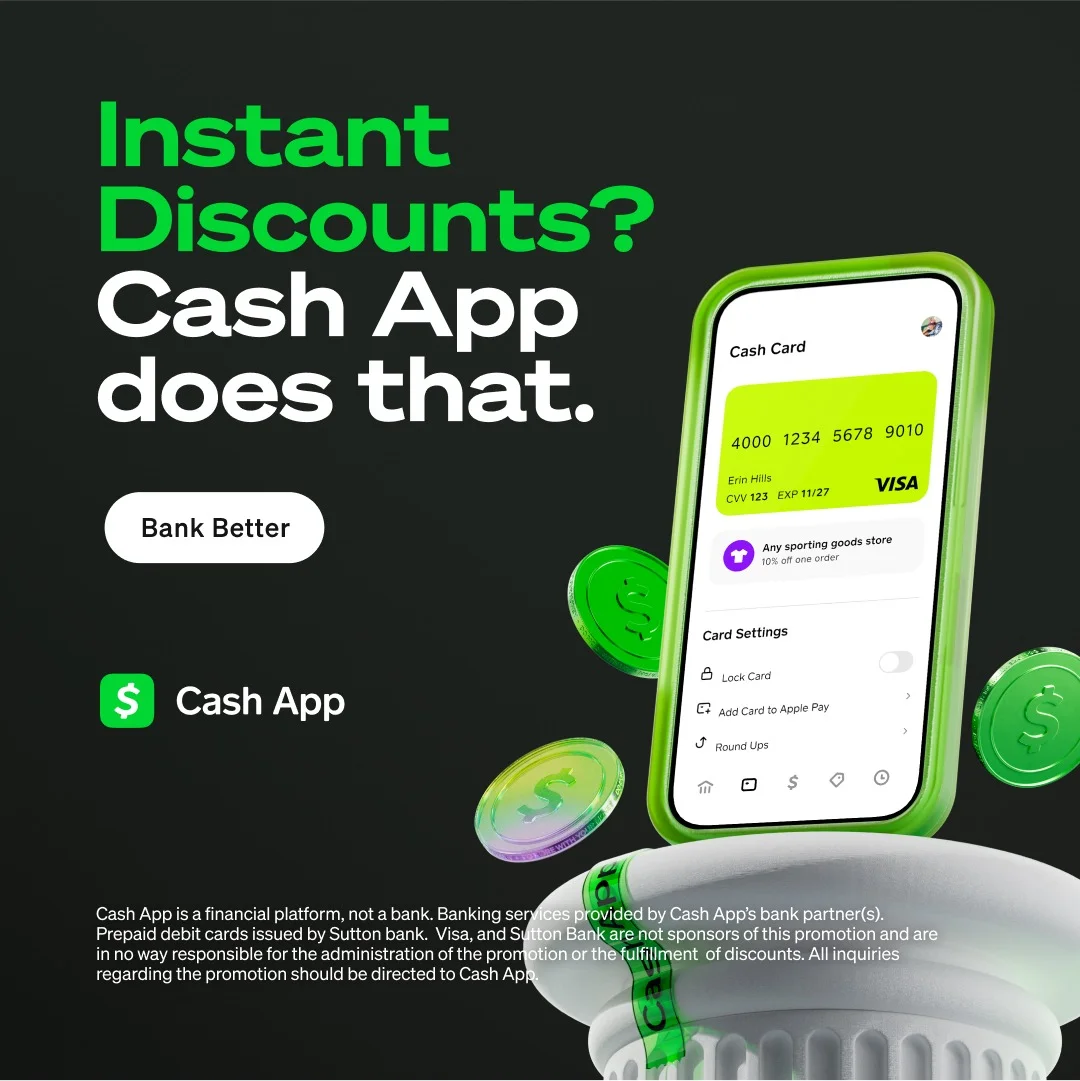
That Cash App install ad — "Instant Discounts? Cash App does that" — is the blueprint: one concrete benefit, the app's own screen as the proof, and a direct install ask. It ran 235 days as of an April 2026 ad-library snapshot, which is the market telling you the format works.
Influencers and creators, used as a barbell
Influencer marketing for apps works best as a barbell, not a single big bet. On the cheap end, seed many micro creators with gifting and tracked promo codes — micro consistently reports lower cost per engagement and stronger ROI than macro. On the other end, take the handful of seeded creators whose content actually converts and whitelist them into paid, running ads from their handle.
Find creators through the TikTok Creator Marketplace and Instagram's paid-partnership label, which unlocks the partnership-ad code. Keep the deal structures simple: a flat fee for a known deliverable, an affiliate or CPA cut for performance, or a hybrid base-plus-commission. The point is to buy creative you can scale, not a one-off post.
Then buy installs, channel by channel
Now you have earned paid. With a listing that converts and organic creative that already works, an app install campaign pours fuel on a machine that already runs, rather than papering over a broken one. Each channel below gets one named objective and one setting that matters.
Apple Ads (formerly Apple Search Ads) splits into two products. Basic is automated, bills per install, caps at $10,000 per month, builds the ad from your listing, and shows only in search results — the four-field indie path. Advanced gives you keyword control, match types, and the API. The headline reason to be here: Apple reports conversion rates over 60% at the top of search results, where intent is highest. Read that as "top-of-search placement," not a blanket rate.
Google App Campaigns are fully automated and asset-driven. You supply asset groups — headlines, descriptions, images, video — set a budget, and pick a bid like Target CPI; Google distributes across Search, Play, YouTube, Display, and Discover. The setting that trips people up is the learning gate: hold edits until roughly the first 100 conversions, or you reset the algorithm before it has data.
Meta runs app installs through the App Promotion objective into Advantage+ App Campaigns, which auto-optimizes bids, audiences, and placements. The non-negotiable: wire up the Facebook SDK or an MMP plus SKAdNetwork and Aggregated Event Measurement in Events Manager first, because post-ATT iOS campaigns are dead without it. For the full Meta number breakdown, see Facebook ads cost in 2026.
TikTok uses its own App Promotion objective, with Smart+ for full automation and Spark Ads to boost organic posts (yours or a creator's) as paid. The budget floors are lower than the rumors suggest: $50 per day at the campaign level and $20 per day per ad group — not the "$500 minimum" that floats around.
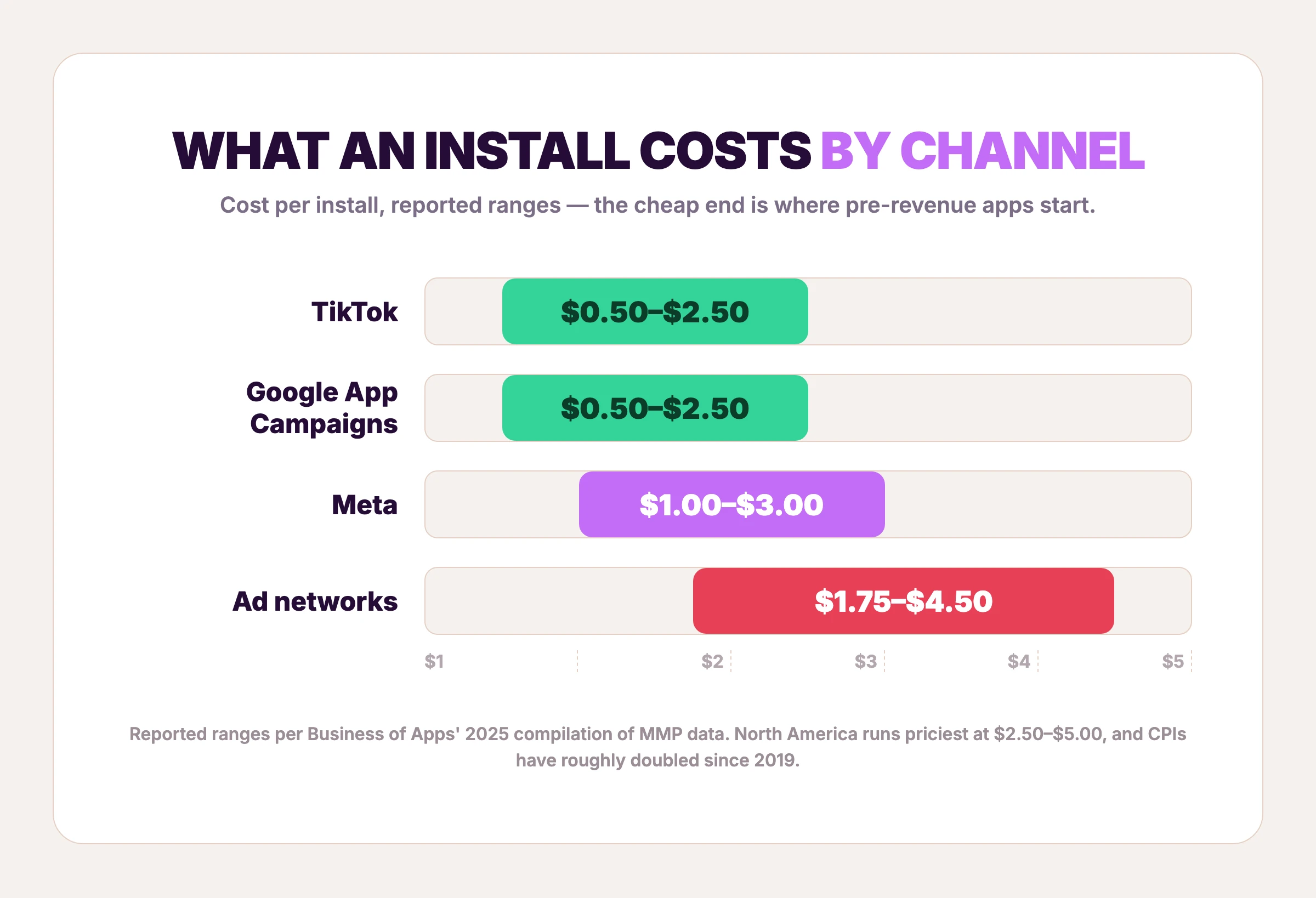
What it costs, per Business of Apps' 2025 compilation of MMP data, runs as reported ranges: iOS cost per install $1.50–$3.50, Android $1.50–$4.00, and North America the priciest at $2.50–$5.00. TikTok and Google App Campaigns sit at the cheap end ($0.50–$2.50), with Meta around $1.00–$3.00 and third-party ad networks like AppLovin or Unity the priciest channel at $1.75–$4.50. Those numbers have roughly doubled since 2019, driven by GDPR and Apple's 2021 ATT changes — privacy, not inflation.
One paragraph that decides whether any of this works: stand up measurement before you spend. An MMP (AppsFlyer, Adjust, Branch, or Singular) is one SDK that ingests every network's data, dedups it, and writes a single attributed record per install — your source of truth, and the endpoint that receives SKAdNetwork postbacks. SKAdNetwork 4.0 is Apple's aggregated, delayed, anonymized attribution, and AdAttributionKit (iOS 17.4+) is its successor. Treat the deep auction mechanics here as phase two; the phase-one rule is simple — no MMP, no clean attribution, no way to know which dollars worked.

Create your own product product ads
Create your ad
Don't pay twice: referrals and retention
An install is the start, not the finish. Roughly 46% of apps are uninstalled within 30 days, per AppsFlyer's 2025 uninstall report. Buy a user, lose them in a month, and you get to pay for the same install twice. Retention is the cheapest acquisition you have.
Two systems fight that churn. The first is referral: a double-sided reward — Dropbox's "give space, get space," or PayPal-style cash. Gate it on a real action, not a bare install, to block fraud, and stitch it together with deferred deep links so the referrer context survives the trip through the App Store. The second is the first session: get the user to real value fast, because that first run is what decides whether they are still here on day 30. Prime push opt-in after a value moment with an in-app primer, never cold on first launch, and back it with behavior-triggered lifecycle email. None of this is glamorous. All of it is cheaper than re-buying the user.
What it costs to advertise an app
The honest answer to how much it costs to advertise an app: it depends on whether you should be running paid at all yet. At North American cost per install of $2.50–$5.00 and rising, and with paid-to-paying conversion often under 5%, a single paying user can cost $50–$100 or more once you do the funnel math. The gate that decides whether that is smart or suicidal is LTV greater than CPI — a rough 3:1 lifetime-value-to-acquisition-cost rule of thumb — and that number is unknowable before you have revenue.
So the counterintuitive call: pre-revenue and indie founders should not lead with paid. Lead with ASO, Product Hunt, Reddit, and organic UGC, then scale paid only once the unit economics prove out. Paid installs do lift your store rank, which feeds more organic, which is a real flywheel — but you earn the right to spin it by validating that a user is worth more than they cost. The MMP and agency listicles that rank for this query sell paid tooling, so they will not tell you to wait. The math will.
Leading with organic does not mean fewer ads. It means pointing the same creative effort at channels you do not pay per click for — Reddit posts, organic TikToks, the Product Hunt gallery, and your store screenshots. Either way, you still need the creative. Which is the part every guide skips.
The part nobody covers: make the ad
Every section above tells you where to advertise. None of them shows you what a winning app ad looks like, or how to make one without hiring a designer. That is the gap, and it is the lever that matters most: top advertisers ship 2,365 creative variations per quarter, up 18% year over year (AppsFlyer), because volume is how you find the 2% that carry the spend. You cannot win on one ad. So the question is how to produce many, fast.
Start by studying what already works. The longest-running app advertising examples are proof: an ad does not stay live for years unless it pays for itself. What follows is what the workhorses run, with how long each ran as of an April 2026 ad-library snapshot.
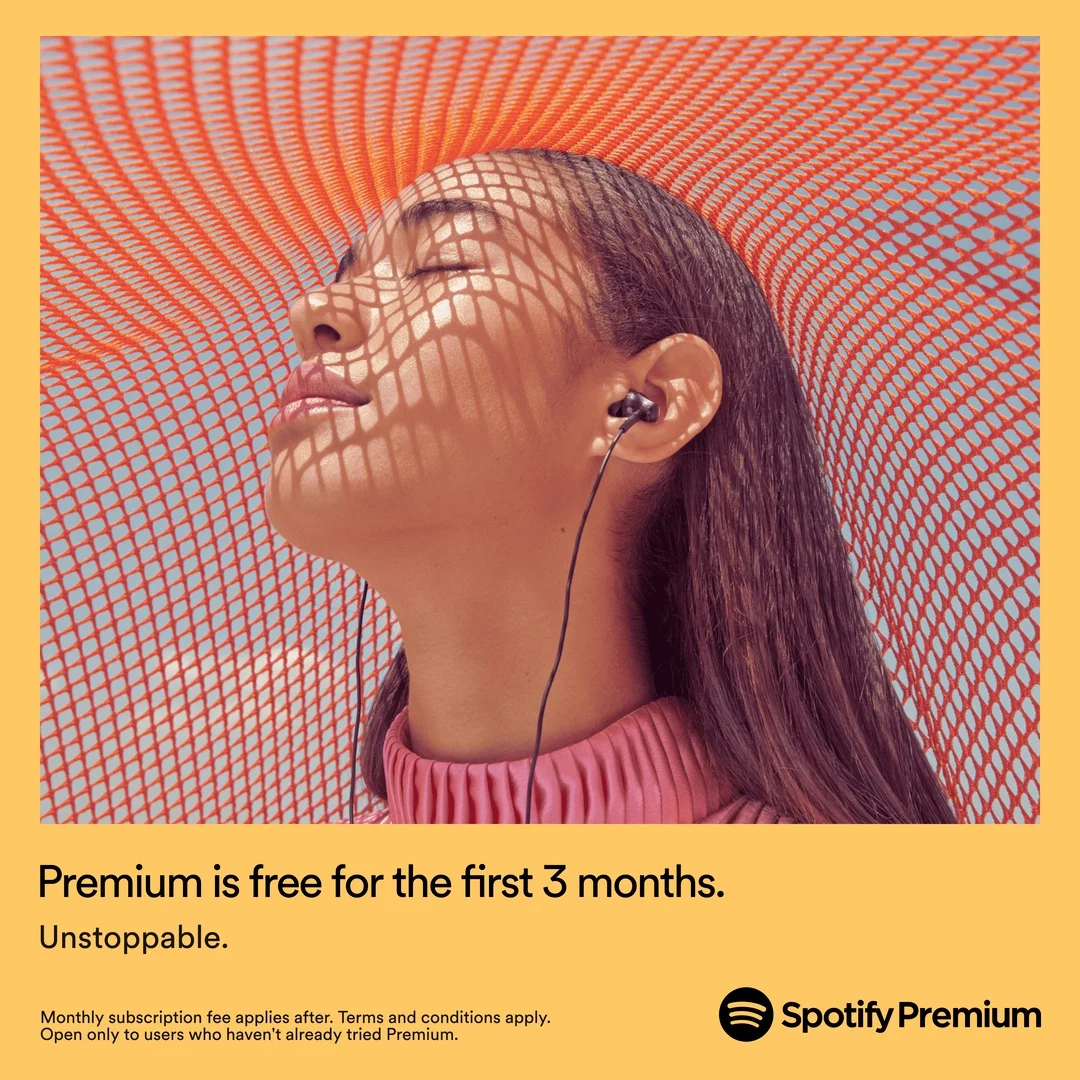
Spotify's "Premium is free for the first 3 months. Unstoppable." ran 1,991 days (nearly five and a half years), which makes it the most proven shape in the set. It is the outcome-plus-free-trial pattern in its cleanest form: one concrete offer, no feature list, no friction. The same shape powers Calm's "Get better sleep with Calm" install ad. And the variant worth stealing when the click is cheap is the curiosity hook: Blinkist's "Barack Obama's Favorite Nonfiction Books" ran 1,666 days without naming a single feature — borrowed authority and an unanswerable question, with the app as the payoff.
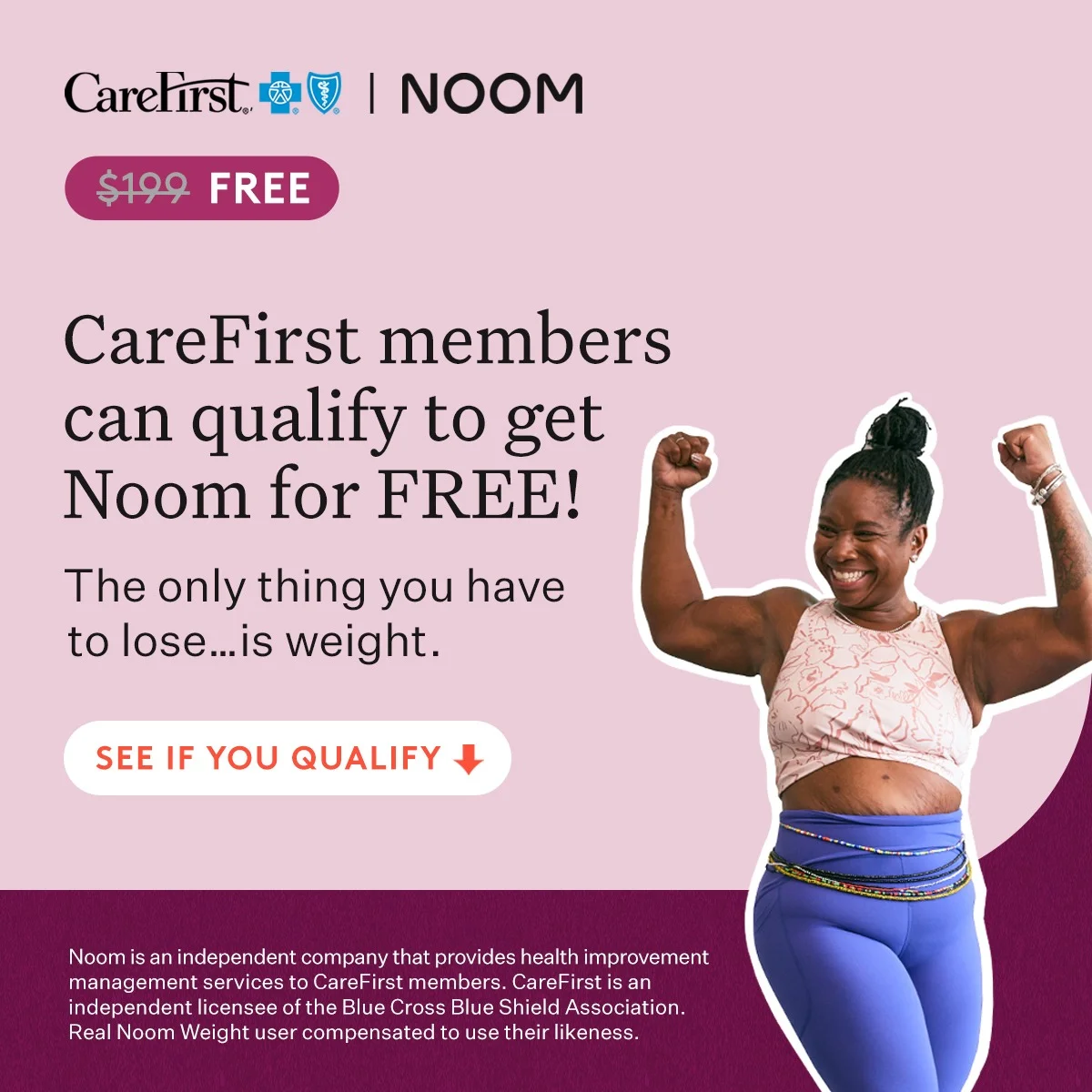
Noom's "CareFirst members can qualify to get Noom for free" ran 533 days on borrowed trust — co-branding with an insurer the reader already recognizes, then leading with the free offer. Authority you borrow converts faster than authority you claim, and a real discount does the rest of the work.
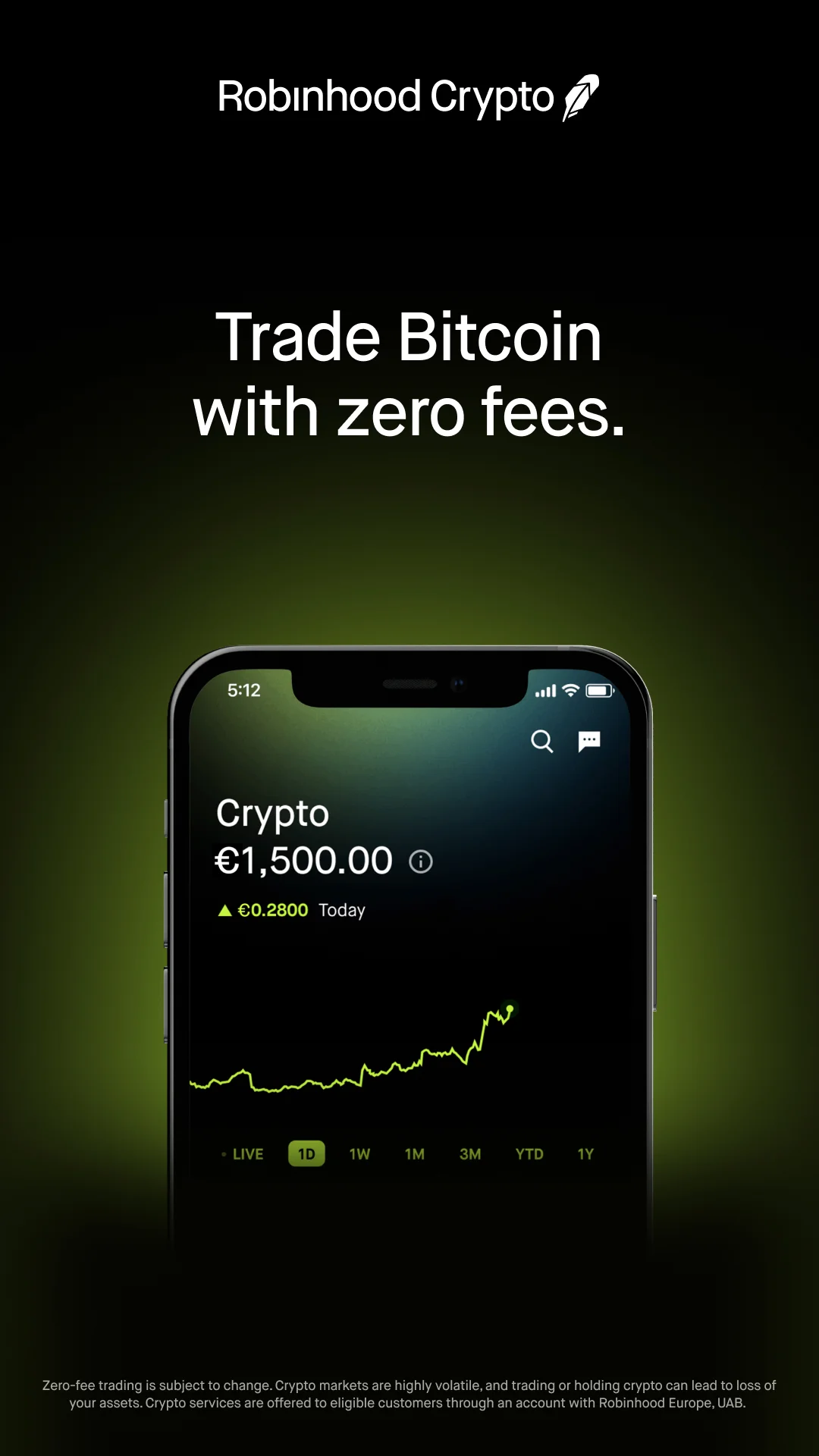
Robinhood's "Trade Bitcoin with zero fees" install ad (331 days) runs the show-the-app pattern: render the interface, let the product be the hero, and the install button does the asking. Fintech and utility apps win this way because the screenshot is the proof — you see exactly what you are downloading.
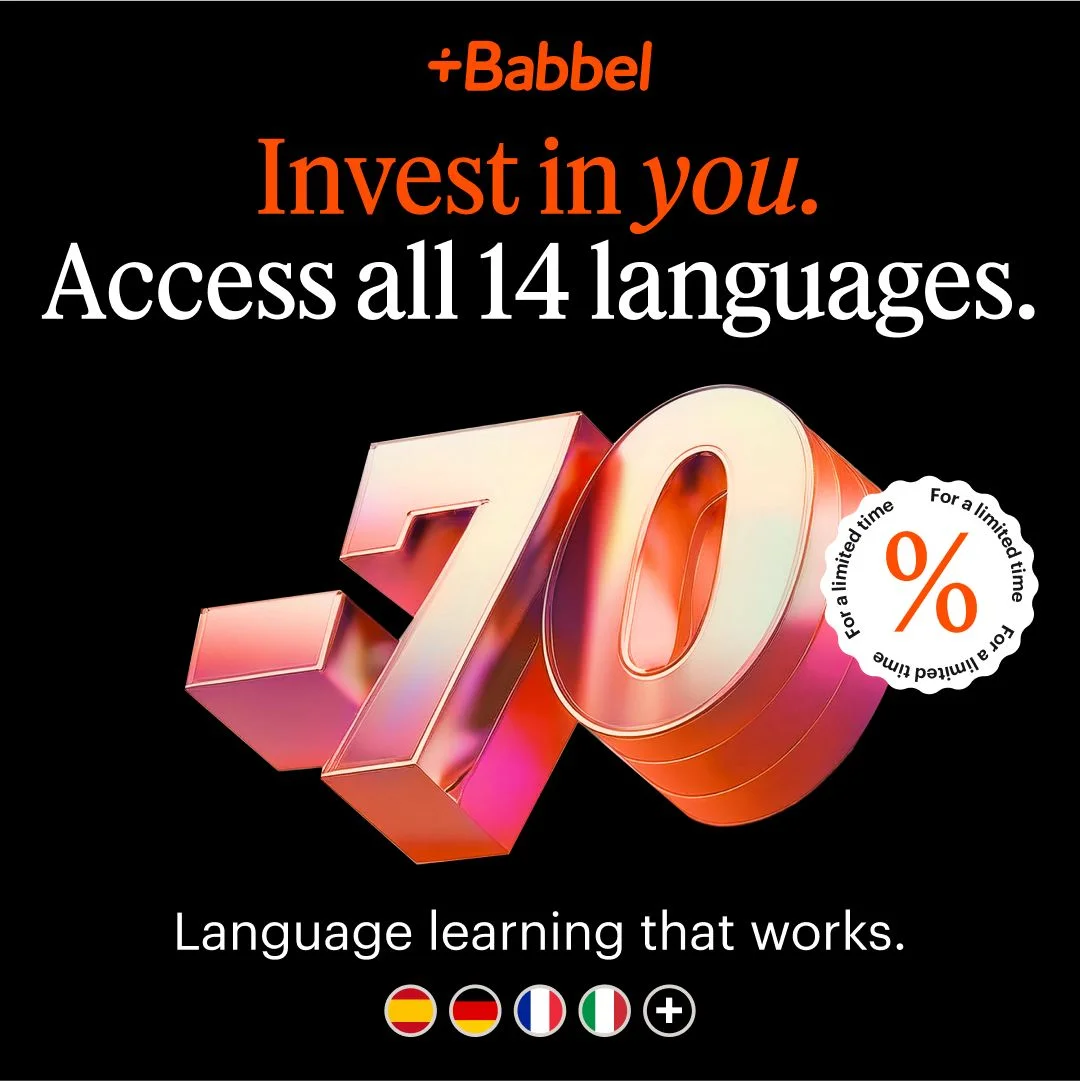
Babbel's "Invest in you. Access all 14 languages." pairs a clear outcome with a hard 70%-off discount (249 days) — the offer pattern, where the deal is the hook and "language learning that works" is the only claim it needs. Across these app ads, four patterns repeat: a one-line outcome with a free trial, the app shown doing its job, a borrowed-authority or curiosity hook, and a direct install ask. That is the playbook. The hard part is producing your version of it at volume.
Volume has a method. Ship five to ten concepts a cycle, put a small equal budget behind each, kill anything running above your target cost per install within a few days, and scale the one or two that beat it. The bottleneck is never the testing. It is making those ten concepts fast enough to keep feeding the loop.
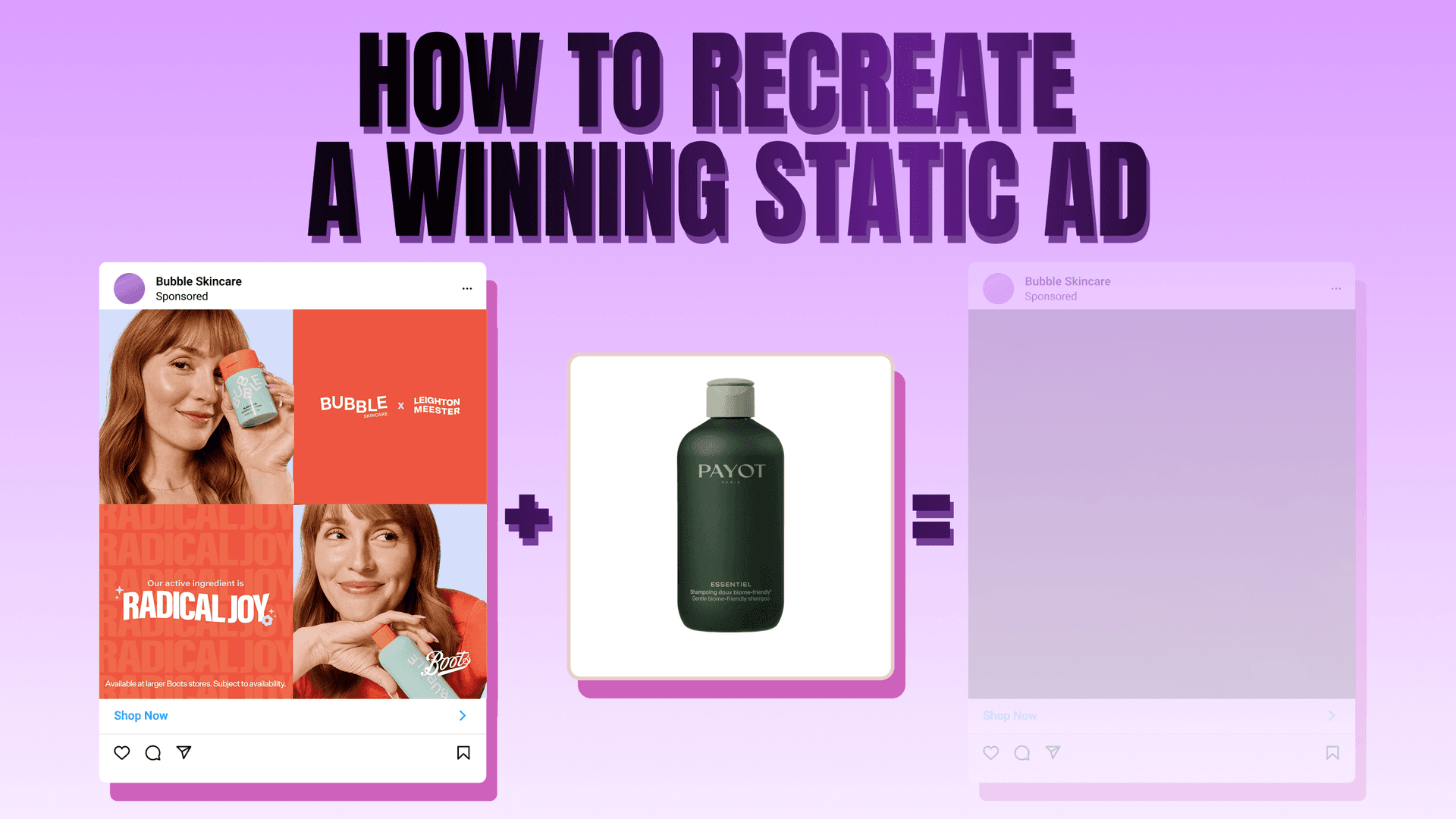
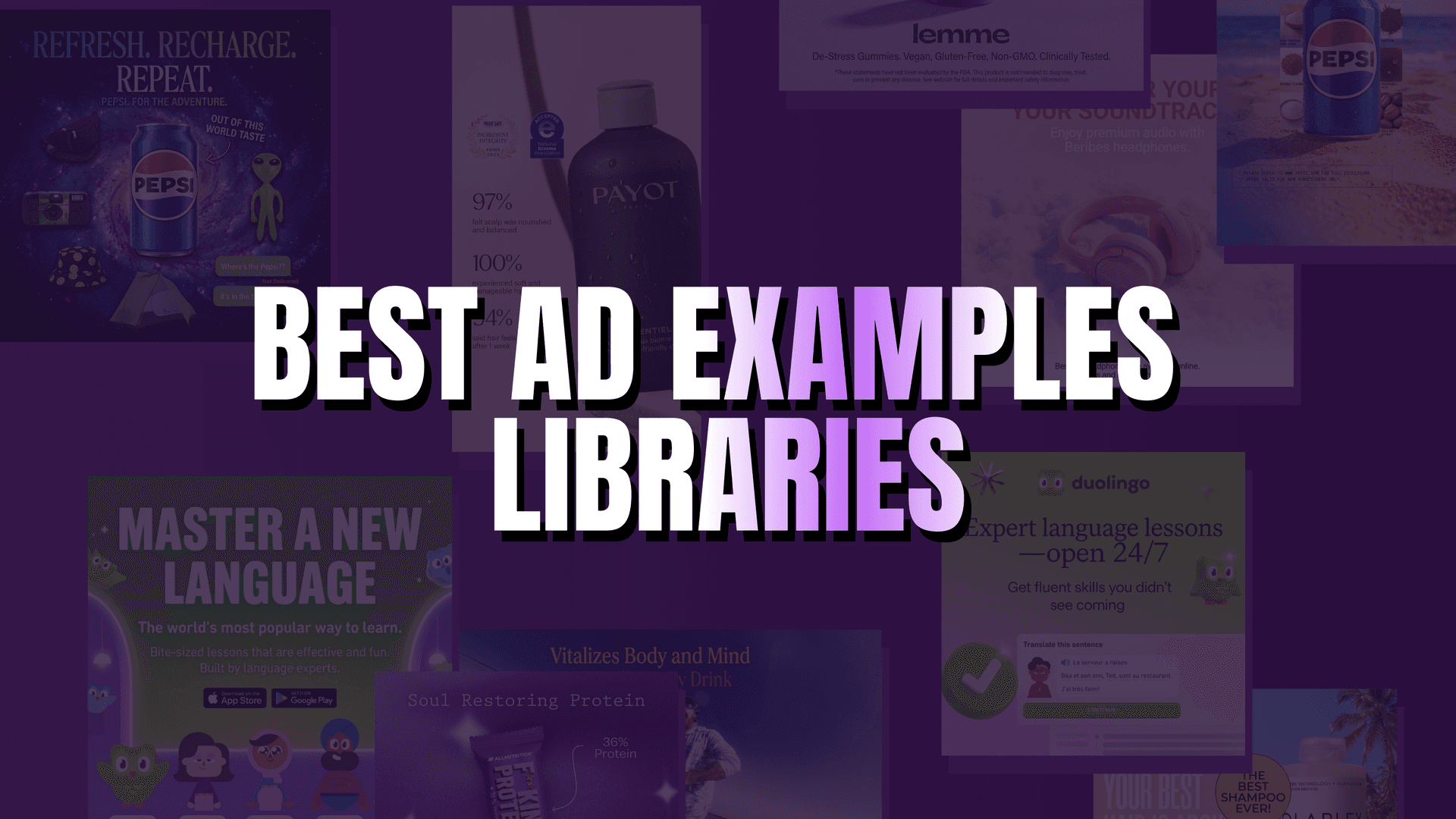
That is the job AdDogs is built for. Instead of briefing a designer or staring at a blank canvas, you clone an ad that already works. Take the Spotify, Cash App, or Robinhood ad you screenshotted in your own feed, upload it, drop in your app screenshot, and the AI rebuilds the layout, style, and composition with your product in place — pulling your brand colors and logo automatically. It finishes in seconds. No app-only category to dig through, so the fastest path is to upload the app ad you already have. Or start from the 14,000+ ad examples in the library. For the full mechanics, the guide on how to recreate winning static ads walks the clone workflow end to end.
Pricing is built for volume because volume is the point. Basic is $12, Pro $33, and Ultimate $63 a month — roughly $0.40, $0.33, and $0.30 per ad, with two months free on annual billing. One credit produces one finished ad in the dimension you pick. Basic covers the three core app-install ratios — 1:1 for feed, 9:16 for Stories, Reels, and TikTok, and 16:9 — and Pro and Ultimate unlock all 14, so you choose the dimension per render. Clone a winner, swap in your app, ship a platform's worth of variations, then test, kill, and scale the way the 2% rule demands. The best app ads to start from are the longest-running ones — browse them in the ad libraries right now.
FAQ
What is the best way to advertise an app?
No single best channel exists. There is a best order, though. Fix your store listing (ASO) so clicks convert, seed free organic through Product Hunt, Reddit, and short-form UGC, then buy installs on Apple Ads, Google App Campaigns, Meta, or TikTok once your unit economics prove out. Lead with the cheapest moves, and treat paid as a multiplier on a machine that already works.
How do you advertise an app for free?
The compounding free channels are ASO (optimize your title, subtitle, and screenshots — the first screenshot is make-or-break), a Product Hunt launch at 12:01am PT, Reddit posts in subs like r/SideProject at a 90:10 value-to-promotion ratio, and organic short-form video that shows the app doing its job. These also produce the creative you later reuse as paid Spark or Partnership ads.
How much does it cost to advertise an app?
Cost per install runs $1.50–$3.50 on iOS and $2.50–$5.00 in North America as reported ranges (Business of Apps' 2025 compilation of MMP data), and CPIs have roughly doubled since 2019 because of privacy changes. TikTok and Google App Campaigns sit cheapest at $0.50–$2.50. Because paid-to-paying conversion is often under 5%, a paying user can cost $50–$100 or more — which is why pre-revenue apps should validate LTV before scaling spend.
Does Apple still take 30%?
The standard App Store commission is 30%, but most small developers pay 15% under the App Store Small Business Program, which applies to those earning under $1 million per year. Subscriptions also drop to 15% after a subscriber's first 12 months. So the real rate for most indie apps is 15%, not 30%.
What's a realistic daily ad budget for an app?
Enough to clear the learning phase, not so much that you cannot read the data. Google App Campaigns need roughly 100 conversions to exit learning, so size the daily budget against your CPI to reach that within a week or two; TikTok floors are $50 per day per campaign and $20 per ad group. For a first paid test, many indie apps start at $20–$50 per day on one channel, with an MMP wired up before the first dollar so the spend is measurable.