Hims Ad Examples
Browse 44 Hims ads ad examples sourced from high-performing campaigns. Clone any design, swap in your product, and get a finished ad in seconds.
Updated September 2026
Hims sells medicine for conditions most men don't want to say out loud — hair loss, erectile dysfunction, anxiety — and ad creative is built to remove the flinch. Muted sage green, warm cream, soft shadows, and copy that names the problem directly without turning it into a punchline. No bro energy, no winking innuendo, no chrome pharma aesthetic. Calm design and plain language.
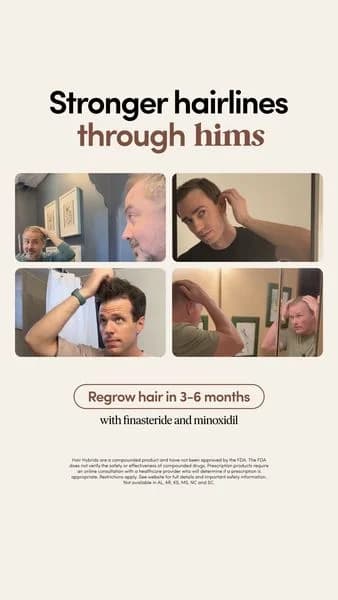
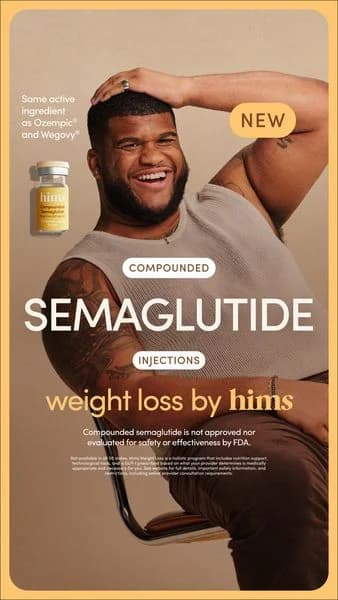
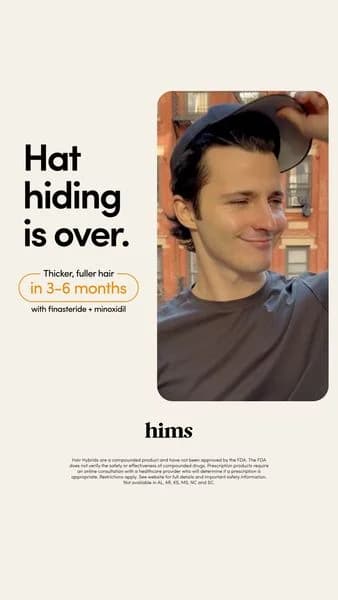
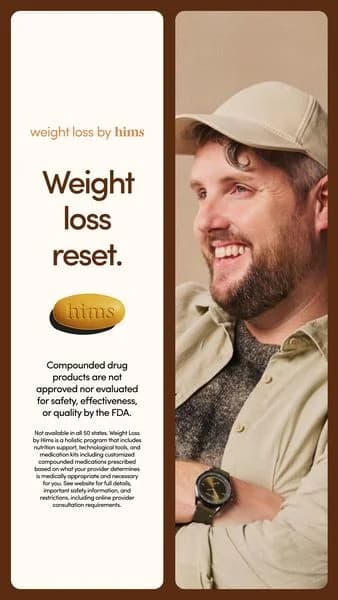
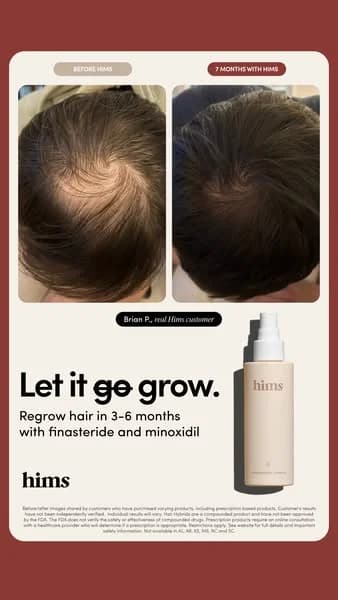
Visual system runs deliberately restrained. Sage green, warm beige, and cream make up 90% of the palette. Product shots stay minimal — a small pill bottle or a spray applicator against a solid background. Typography is clean serif or modern sans-serif, always lowercase, always gentle. Copy owns the destigmatization work: "Hair loss isn't forever," "Performance issues? You're not alone." Models are average men in their 30s and 40s, shot with soft natural light, often mid-smile or mid-laugh to counter-signal the heaviness of the category. Facebook, Instagram, and YouTube pre-roll run the heaviest placements, with Hulu and Roku CTV ads expanding reach.
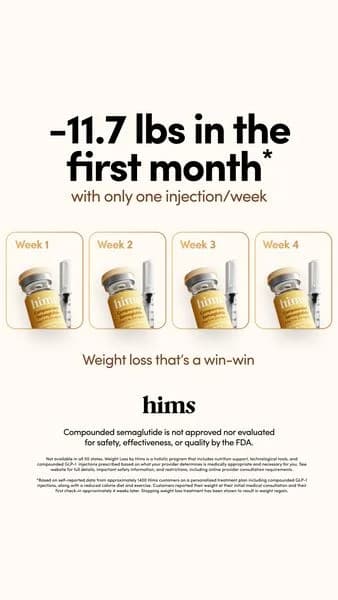
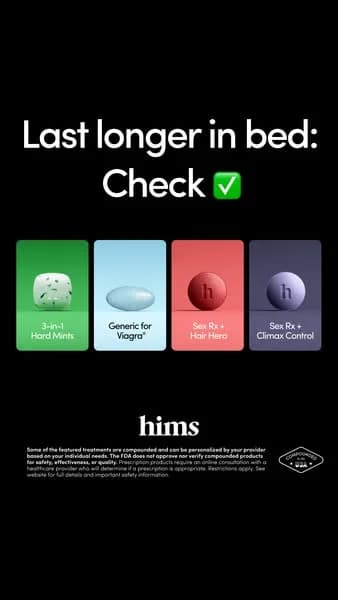
Our Hims ad examples collection shows product stills, destigmatization copy, and testimonial carousels that rebuilt the men's health category. Filter by format to find the minimalist bottle statics, the mid-laugh lifestyle shots, and the plain-language headline cards that repeat across placements. Each entry points out how the sage palette stays locked, where the lowercase copy sits, and which condition each creative tier opens with.
 Why Clone Ads
What Makes Hims Ads Convert
Name the problem plainly, without euphemism
Hims ads say "hair loss" and "erectile dysfunction" — not "performance issues" or "thinning concerns." Clinical directness outperforms polite dodging because it tells the customer the brand respects them. Products addressing stigmatized problems should say the blunt word. Customers who need the product are already searching it.
Soft masculine is an unoccupied palette
Most men's-health ads default to black, chrome, and aggressive red. Hims went sage green and cream and now owns the aesthetic. Any category's default color system has an opposite worth testing. Palette whitespace is often the cheapest positioning advantage in the category.
Use models mid-smile, not mid-flex
Hims models stay laughing, mid-conversation, relaxed. They're not flexing, not squaring their shoulders, not doing the Men's Health cover pose. Expression signals "this product works for normal people living normal lives." For any lifestyle category, casting for relaxation rather than intensity usually tests better on comfort-driven purchases.
Hims ads work because they remove shame from categories that historically ran on it. Plain language ("hair loss," "ED"), calm visuals (sage and cream), and models who look like actual customers combine to say "you're normal, this is treatable, here's the fix." Combined with a subscription model that simplifies refills and a telehealth flow that skips the pharmacy counter, the ad-to-conversion path runs shorter and warmer than any traditional pharma play.
Muted sage green, warm cream, soft beige, and warm gray make up the core palette. Product accents often run cream and white. No loud reds, no chrome, no harsh contrast. Palette reads wellness-adjacent rather than pharmaceutical, which is the positioning wedge — Hims is medicine that doesn't feel like medicine. Typography stays lowercase and neutral to match the calm color system.
Men 25-55 dealing with stigmatized health issues — hair loss (broadest audience), erectile dysfunction, anxiety and depression, premature ejaculation, skincare. Buyers skew digital-native, comfortable with telehealth, and actively avoiding the awkwardness of a doctor's office or pharmacy counter for these categories. Hims ads speak to that buyer directly, often framing the brand as "the product that skips the conversation you didn't want to have."
Plain language, relaxed models, and soft palettes do the destigmatization work. Headlines name the condition directly ("hair loss," "ED," "anxiety") rather than using euphemisms. Models stay mid-smile or mid-conversation rather than posed stoically. Palette and typography avoid pharma cliches — no pill bottles exploding into light rays, no clinical white-room shots. Whole creative system signals "this is a routine, manageable thing, not a crisis."
Facebook and Instagram carry the largest slice of Hims spend, with YouTube pre-roll running longer testimonial and doctor-explainer spots. CTV has grown substantially — Hulu, Roku, and Peacock see regular Hims rotation, especially around sports and late-night programming. TikTok skews toward Hims Skin and the younger hair-loss demo. Google Search retargets hair-loss and ED queries heavily, often with the same sage-palette creative adapted to display banners.
Create Your Own
Hims Ad
Clone any hims ad example. Upload your product photo. Seconds later, you have a finished ad ready to launch.
Create your ad