Shopify Ad Examples
Browse 22 Shopify ads ad examples sourced from high-performing campaigns. Clone any design, swap in your product, and get a finished ad in seconds.
Updated September 2026
Shopify ads don't sell software. They sell the promise of someone else's business — a candle maker quitting her corporate job, a sneaker reseller scaling to seven figures, a bakery in Brooklyn that now ships nationwide. Product comes in as the invisible engine underneath every success story, and the ads barely mention features.
Visual patterns across the brand stay consistent. Shopify green anchors the palette, paired with white, soft gray, and occasional warm accent tones pulled from merchant brands. Dashboard screenshots appear often — stylized, with real-looking sales numbers and product rows. Big-logo carousels ("Gymshark, Allbirds, Fashion Nova, and 1M+ merchants") run as social proof. CTA copy nearly always runs action-oriented: "Start your business," "Try Shopify free," "Start your free trial." Creative adapts by channel — Facebook for solo founders, LinkedIn for enterprise, Instagram for creators, YouTube for longer merchant-story spots. TV and CTV handle the broader brand campaigns.
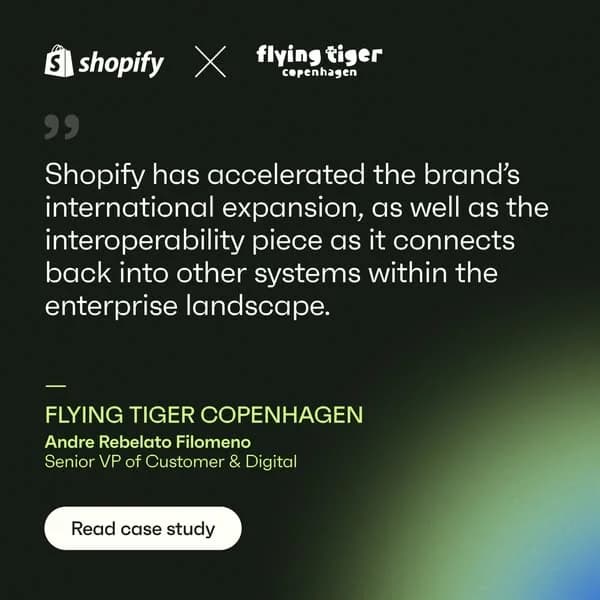
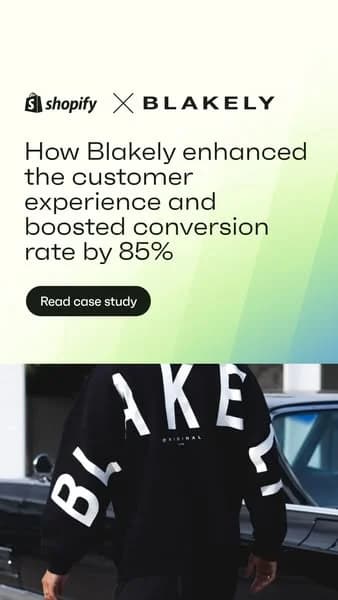
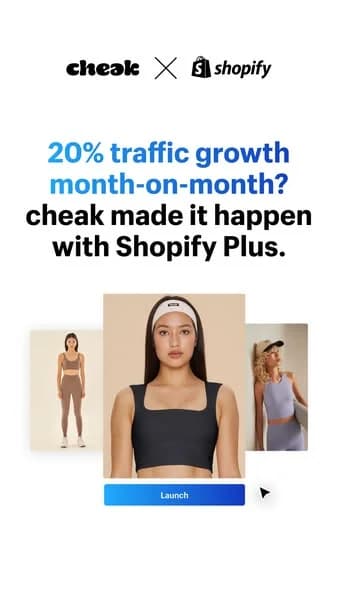
Our Shopify ad examples collection pulls merchant testimonials, dashboard statics, and big-logo carousels that built the platform. Filter by format to find the founder-with-product stills, the dashboard-screenshot statics, and the logo-wall social proof carousels that serve different buyer segments. Each entry surfaces how the green palette stays locked, where the merchant revenue stat sits, and which funnel segment the creative opens with.



 Why Clone Ads
What Makes Shopify Ads Convert
Sell the customer's business, not your product
Shopify's best-performing ads feature a merchant — their name, their product, their founder story. Shopify itself stays almost invisible. Platforms that enable customer outcomes (sales, growth, bookings) should turn the customer into the hero. Your product becomes the implicit backbone rather than the explicit pitch.
Big-logo carousels are the cheapest social proof you can run
Shopify ads regularly feature "Gymshark, Allbirds, Fashion Nova, and 1M+ others" — recognizable brand names doing credibility work in a single frame. Recognizable brands using your product should appear as logos in an ad. Permission required, obviously. Recall lift versus generic testimonial copy is substantial.
Show the dashboard with believable numbers
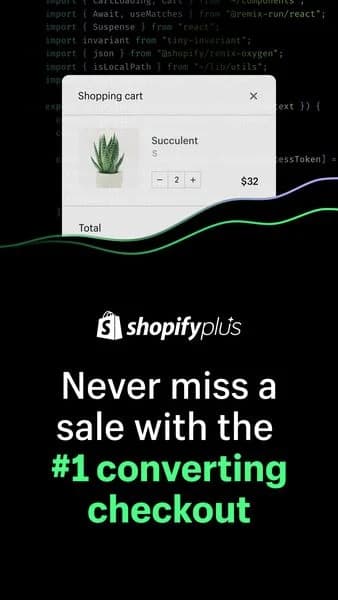
Shopify ads often show the admin dashboard with realistic sales figures — $47,382 month-to-date, not $1,000,000. Believability is the point. Fake numbers read as marketing; realistic ones read as proof. Products with a dashboard should mock screenshots with numbers at the scale a new customer would see on day one.
Shopify ads work because they sell merchant outcomes rather than platform features. Shopify built an ad system around customer stories — a founder, a product, a sales number — and let the software itself recede into the background as the implicit engine. Green brand cues keep visuals recognizable, big-logo carousels handle social proof, and dashboard screenshots give buyers a concrete mental picture of what they'd see after signup. Every ad runs as an aspiration story with a free-trial CTA.
Shopify green — a specific bright, slightly sage-adjacent green — is the hero color across every ad. Secondary palette includes white, soft gray, black for typography, and warm accent tones pulled from featured merchant brands. Creative occasionally includes color from merchant logos (Allbirds blues, Gymshark blacks, Fashion Nova pinks), which brings more tonal variety than most SaaS ad programs. Green stays constant; merchant colors flex around it.
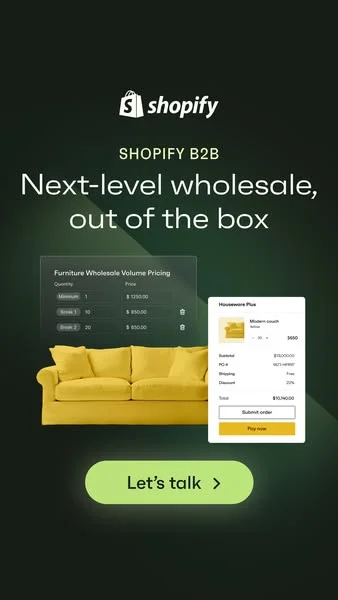
Three distinct buyer segments. Solo founders and side-hustlers thinking about starting a store — targeted on Facebook and Instagram. Growing DTC brands doing $50K-500K/year in revenue — targeted on LinkedIn and retargeted across display. Enterprise merchants and agencies — targeted with Shopify Plus-specific creative on LinkedIn and industry publications. Ad creative shifts tone and proof points by segment, with visual system staying consistent.
Merchant stories run as the central creative device. A single founder, their product, their journey, and usually a specific milestone ("from zero to $1M in 18 months"). Video ads tell the story longer; statics freeze a single frame — the founder holding their product, the warehouse shot, the website on a laptop. Specificity of the merchant (their name, their city, their product) separates the creative from generic "success story" testimonials most SaaS brands run.
Shopify's total sales and marketing spend runs into the billions annually per public filings, with paid media a substantial portion. Estimates place Meta and Google combined spend in the hundreds of millions per year, not counting CTV, Super Bowl slots, and partnership marketing with creators like MrBeast. Volume sits across thousands of merchant-story variants, which is why the green-and-white visual system and the customer-as-hero formula need to stay lockstep across placements.
Create Your Own
Shopify Ad
Clone any shopify ad example. Upload your product photo. Seconds later, you have a finished ad ready to launch.
Create your ad