Report · 2026AdDogs Research
Adoption hit 83–91% of marketers. Half of consumers prefer brands that skip it. What 2026 charged for visible AI, who paid, and the workflow that didn't.
Open the report ↓On February 8, 2026, the most effective commercial in Super Bowl LX sold an AI product and scored 9.1 times the median ad on EDO's engagement index. The only commercial in the game generated by AI finished 60th of 66. That one night is the state of AI in advertising in 2026 compressed to two numbers: audiences will watch an ad about AI, and they will punish an ad that looks like a machine made it.
AI in advertising stopped being an adoption story this year. 83% of ad executives say their company now uses AI in the creative process, and 9 million small businesses run at least one of Meta's AI ad creative tools. What changed in 2026 is that the cost of visible AI got a price. The audience priced it in every poll that ran. Third-party scoreboards priced it on the biggest stages. Disclosure law priced it in New York and the European Union. This report tallies the year through October 19, 2026, with a source at every number, and ends with the workflow the advertisers who didn't pay the tax used instead.
The vendor reports that came out this year counted adoption and forecast spend. None paired adoption with what happened to the brands that shipped the output, what the audience said about it, or what the law now requires of it. So this is that report: twelve findings on AI in advertising, each with its receipts.
AI in advertising means using generative or predictive models to plan, target, write, or render ads. In 2026, 83% of advertisers use it somewhere in the creative process and about a fifth trust it with the finished ad. The gap between those two numbers is where this year's money was made and lost.
The twelve findings, in one minute
- Adoption saturated at 83% to 91% of advertisers. Only 7% use AI at launch.
- The one AI-generated Super Bowl ad scored 43% below the median; ads about AI scored up to 9 times it.
- The slop tax has a price: sentiment down 13.6 points, disclosure cuts click-through 31.5%, undetected AI costs nothing.
- Every 2026 consumer poll came back negative; 62% call AI ads unacceptable even when disclosed.
- Eight brands paid in public, and the new thing is the absence of shame.
- The platforms absorbed the ad generator; the ad under your name may be one you never saw.
- Sora shut down with six months' notice, static generation became a commodity, and indemnity is uneven.
- Volume still wins: top-quartile accounts ship 1.7 to 2.9 times the median and the top 2% of creatives take 60.7% of spend.
- Disclosure became law in New York (June 9) and the EU (August 2); product imagery with no synthetic human falls outside both.
- "No AI" became a positioning, from Aerie's pledge to Irn-Bru topping the World Cup rankings.
- The advertisers who escaped the tax anchored on a proven reference, locked the brand, bounded the variants, kept a human gate, and left synthetic humans out.
- 2027 is already dated: Coca-Cola's call, the EU marking deadline, NYT v. OpenAI, Cannes under the same rules.
AI in advertising adoption saturated. Depth didn't.
83%
of advertisers use AI somewhere in the creative process, up from 60% in 2024. IAB and Sonata Insights, 104 US executives.
Every 2026 survey of AI in advertising lands in the same band. IAB and Sonata Insights put AI in the creative process at 83% of advertisers, up from 60% in 2024 (104 US executives with $1M+ media budgets, fielded October 2025 to January 2026). Advertiser Perceptions found 91% using or planning to use AI for creative development and 63% already using it in creative assets (303 interviews, January 2026). HubSpot's 2026 State of Marketing says 86.4% of marketing teams use AI in at least a few areas. Jasper's vendor survey of 1,400 marketers says 91%, up from 63% a year earlier. Adoption is no longer a number worth arguing about.
7%
of DTC marketers use AI at launch, against 82% at ideation. Motion pulse, 380 marketers.
Depth is. The same Advertiser Perceptions sample shows only 38% use AI to build an entire creative asset, and "only a quarter use AI for all creative assets, driven by SMB advertisers." The asset types are evenly split: 72% of the AI users apply it to copywriting, 72% to static images, 72% to video. Smartly's seventh annual trends report (450 marketing leaders in the US, UK, and Germany) counts 46% of marketers using AI to scale creative production and 95% testing it, while 42% of the generative-AI users still describe their approach as "initial testing." Motion's pulse of 380 DTC marketers draws the sharpest line: 82% use AI during ideation, 76% during research, 61% during briefing, and 7% at launch. The machine is everywhere upstream of the ad and almost nowhere in the ad itself.
Advertisers
Consumers
Sources: IAB and Sonata Insights (fielded Oct 2025 to Jan 2026); Jasper State of AI Marketing 2026 (vendor survey, 1,400 marketers); Cannes Lions chair, June 2026; Gartner, 1,539 US consumers, March 2026; Gallup, 3,270 US adults, May 2026.
Results lag the tooling. Comcast Advertising's State of AI report (216 brand and agency respondents, November 2025) found 77% believe AI is transforming the industry, 61% have "not seen meaningful results from AI yet," 82% use it to identify or segment audiences, and 20% use it for full ad production. Those numbers describe a tool that has been switched on in most accounts, pointed at targeting first, and trusted with the finished ad in a fifth of them. HubSpot's sample adds the hedge marketers are already placing: 62.7% believe they need more unique, human-centered content to compete with AI content.
The platform numbers tell the same story from the supply side. Meta reported 8 million-plus advertisers using at least one AI creative tool in Q1 2026, double the year before, then 9 million small businesses in Q2, with image-generation adoption more than doubling in the quarter and the Advantage+ suite past a $75 billion annual revenue run-rate. Every one of those figures is Meta counting its own customers. None of them says what the generated ads did.
AI commercials on the scoreboard: Super Bowl LX and Cannes
2026 produced the first hard, third-party scores for AI commercials on the stages everyone watches, and the scores were not close.
EDO ranked all 66 Super Bowl LX commercials by engagement against a median of 100. Fifteen of the 66 either used AI or sold it. The ads selling it did fine or better: ai.com scored 910, Anthropic's two Claude spots 280 and 279 (ranks 12 and 13), OpenAI's Codex spot 187. Svedka's "Shake Your Bots Off," the game's only primarily AI-generated commercial, built with Silverside AI on ComfyUI pipelines and choreographed in hours instead of months, scored 57. Rank 60 of 66. The one commercial a machine made landed 43% below the median in a game where ads about machines were the story.
The only primarily AI-generated commercial in the game. Fembot and Brobot dance at a human party; built with Silverside AI on ComfyUI pipelines, choreographed in hours.
Video: SVEDKA on YouTubeAn ad about AI, made by people. Scored 1.9 times the median; the ads selling AI did fine, the one made by it did not.
Video: OpenAI on YouTubeSource: EDO, Super Bowl LX engagement index, February 2026. Median = 100; Svedka ranked 60 of 66.
System1 saw the same shape with a different instrument. Its star ratings put ads for AI products at an average of 2.1 stars against a declining game average of 2.7, with fewer than 20% of all ads now clearing the 3-star threshold System1 ties to business impact. Ads about AI scored below the game average. The one ad made by AI scored far below it.
40%
of Cannes Lions entries declared AI use, up from 20% in 2025 and 11% in 2024, under mandatory disclosure.
Cannes Lions in June scored the industry rather than the audience. 40% of entries declared AI use, up from 20% in 2025 and 11% in 2024, under new rules that made disclosure mandatory after the 2025 scandal in which DM9's Creative Data Grand Prix was withdrawn over an AI-manipulated case film. Chair Phil Thomas put the rule plainly: "Every entry must state whether they used AI and how it was used." Entries fell 25% to 20,050 once CEO and CMO sign-off and a three-year ban for willfully false entries came in.
The Film Grand Prix went to Anthropic's Claude Super Bowl spots, human-made ads mocking ads inside AI assistants. Jury president Pelle Sjoenell called it "an AI making fun of AI." The Digital Craft Grand Prix went to Google's Project Genie, and its jury president Andrés Ordóñez summed up the festival's position on the tool in five words: "technology alone is never enough." Juries rewarded AI used as craft and declined to reward AI used as a shortcut, which is the same split the EDO scoreboard drew in February.
The counter-reading: System1 and Tom Roach tested 18 AI-assisted ads in November 2025 and found they averaged 3.4 stars against 2.3 across the firm's 123,000-ad database. The sample is small and the operative word is assisted. An ad a human directed and a model helped render tests well. An ad a model rendered and a human approved scored 57. If your ad will be scored, the question the scoreboard asks is whether a human directed it.
The slop tax, priced
The slop tax is the cost a brand pays, in attention, sentiment, or pulled spend, when its audience identifies an ad as AI-generated. It is a perception tax, not a provenance tax. That definition held through 2026. What changed is that four separate instruments now give it a price.
−13.6 pts
Coca-Cola's positive share of conversation, 23.8% before the AI holiday ad and 10.2% after. CARMA.
−43%
The only AI-generated Super Bowl ad against the median, EDO index 57 versus 100.
−31.5%
Click-through once viewers were told the ad was AI-made. NYU and Emory field experiment, Google Display.
0.76% vs 0.65%
Click-through for AI ads versus human ads across 500 million Taboola impressions, equivalent under matched controls. Only ads perceived as AI lost.
Year two of the AI remake, made with Silverside and Secret Level in about a month. Maximum 5.9 stars on System1, flat and mocking on social. Both readings are in the tiles above.
Video: Coca-Cola on YouTubeSentiment. Coca-Cola ran an AI "Holidays Are Coming" for the second consecutive year in November 2025. CARMA's monitoring put the positive share of conversation at 23.8% before launch and 10.2% after. Negative barely moved, 31.4% to 32.0%. The conversation went flat and mocking rather than hostile. The same ad scored a maximum 5.9 stars on System1's Test Your Ad and topped UK Christmas testing for sales potential. Both readings are true: effectiveness testing and cultural sentiment measure different things, and in 2026 the gap between them widened.
Coca-Cola's head of generative AI, Pratik Thakar, told the Hollywood Reporter the 2025 craft was "ten times better" than 2024. Sensor Tower's estimates put holiday ad spend up 110% and impressions up 91% year over year. No sales lift has been disclosed, and as of October 19, 2026, no 2026 holiday campaign has been announced.
Scoreboard. Svedka's 57 against a median of 100, in the chart above. The only AI-generated ad with a public third-party engagement score on the year's biggest stage underperformed by 43%.
Disclosure. The NYU and Emory field experiment on the Google Display Network (SSRN working paper, not yet peer-reviewed; figures confirmed via NYU Stern) found fully AI-generated display ads earned 19% higher click-through than human-expert ads, and that telling people an ad was AI-made cut click-through by 31.5%. As of October 2026 no journal version has appeared.
No penalty. Across 500 million impressions on Taboola, researchers from Columbia, Harvard, the Technical University of Munich, and Carnegie Mellon found AI ads at 0.76% click-through against 0.65% for human ads, a gap that dissolved to statistical equivalence under matched-pair controls. Only one group underperformed: ads the audience perceived as AI, whatever their true origin. Roughly half the AI ads passed as human. Oded Netzer of Columbia Business School framed the result: "By analyzing over 500 million impressions, we were able to move past the hype of GenAI and uncover its real impact in large scale settings."
Ipsos added the 2026 measurement with Syracuse's Newhouse School, testing 10 matched pairs of human and AI ads from major brands on 3,000 US adults in May. Only 25% of viewers were even somewhat confident an AI ad was AI-made. The human ads still came out 14% stronger on Ipsos's short-term sales index and 17% stronger on its long-term equity index. AI held its own on functional briefs and lost on emotional ones. Viewers could not say what was missing, and the sales and equity indexes could.
The creative-testing firms agree on the conditional. Kantar's analysis of hundreds of AI-touched ads in its LINK database (November 2025) found more than 40% of ads with what Kantar calls "seamless" AI integration landed top-tier on branded cut-through, while ads with obvious AI use scored worse and drew stronger but more negative emotion. Two 2026 journal studies add the mechanism. A Journal of Retailing and Consumer Services experiment found ads with lower AI involvement, human plus AI, outperformed fully AI-generated ones on curiosity and engagement. A Journal of Advertising framework explains why disclosure stings: it raises perceived transparency while lowering perceived authenticity, creativity, warmth, and effort. The peer-reviewed Prada study showed the effort penalty lands hardest on luxury brands, where the audience expects to see the work.
Undetected AI costs nothing on click-through. Detected AI costs sentiment, engagement, and trust. And even undetected AI leaves measurable equity on the table when the brief is emotional. The only AI tax is looking like AI, and the only AI discount is a brief that never needed a human in the first place.
What the audience said in 2026
Every consumer poll published this year came back negative, including the one with the best methodology.
62%
of Americans call AI-made advertising unacceptable even when the business clearly discloses it. Gallup, May 2026.
Gallup interviewed 3,270 US adults in May 2026 for the Bentley-Gallup Business in Society study. 79% had seen ads in the past 30 days that looked AI-made. 49% view businesses using AI to create ads negatively against 19% positively. Among 18-to-29-year-olds, 66% are negative. 62% say the practice is unacceptable "even when businesses clearly disclose that AI was used." Disclosure does not buy the ad back.
Gartner (1,539 US consumers, published March) found 50% prefer to give their business to brands that do not use generative AI in consumer-facing content, and 68% frequently wonder whether what they see is real. Klaviyo and Datalily (8,000 consumers, eight countries, vendor-commissioned) found visibly AI-generated marketing makes 7% trust a brand more and 31% trust it less.
The Harris Poll's Cannes study with the 4As and Infillion reported 63% less likely to buy from a brand using AI-generated ads and 73% less likely to trust a suspected AI ad. It never published a sample size or fieldwork dates, so those are stated preferences with that caveat. Canva's consumer survey, sample unstated, found 70% believe they can usually spot an AI ad, 69% worry advertising will become "a sea of AI-generated slop," and 74% are more likely to buy from an ad they believe humans made entirely.
Smaller 2026 polls point the same way and deserve the same caveats. Net Conversion (1,500 US adults, agency-commissioned, September) found 54% trust a brand less when they can tell its ads were AI-made. YouGov Australia (1,046 adults, May) found 45% would trust a brand less and 86% want disclosure. None we found between June and October 2026 showed a majority in favor.
Polls fielded January to September 2026. Harris and Canva never published sample sizes; Klaviyo and Net Conversion are vendor- or agency-commissioned. No poll found between June and October showed a majority in favor.
The executive-consumer gap did not close with exposure. IAB measured 82% of ad executives believing Gen Z and millennials feel positively about AI ads, against 45% of those consumers who actually do: a 37-point gap, up from 32 the year before, with 39% of Gen Z explicitly negative. The vendor thesis that audiences acclimate as AI ads multiply has one longitudinal test, and the gap widened.
1M+
presses of LinkedIn's "seems like AI slop" button in its first three weeks. Flagged posts lost about 40% of views.
"Slop" stopped being vocabulary and became tooling. Merriam-Webster named slop its 2025 word of the year, defined as "low-quality digital content, usually produced in quantity by AI." YouTube's chief, Neal Mohan, listed "managing AI slop" as a 2026 priority in January. LinkedIn shipped a "seems like AI slop" report button on July 30. Users pressed it more than a million times in three weeks, and flagged posts lost about 40% of their views, by LinkedIn's own count.
On the supply side, DoubleVerify counted more than 500 million ad impressions on low-quality AI content in the first half of 2026, and the TAG, ANA, and Fiducia analysis put AI slop sites at 1.3% to 2.4% of open-web programmatic spend, priced at $7.08 per thousand against $6.15 for clean inventory. Advertisers are paying a premium to appear next to slop while their audiences build reflexes to report it. For a brand running its own paid social, the planning number is 62%: disclosure will not save a creative the audience reads as AI.
AI slop ads: the 2026 catalog
"AI slop ads" is now a search term up 1,157% year over year (DataForSEO, US, October 2026), and the page-one results are a Reddit thread titled "Can companies please stop making AI generated ads?" An AI slop ad is one the audience identifies as machine-made, and the AI advertising examples below are the 2026 cases where that identification cost the brand something.
| Brand | Date | What ran | What happened | Source |
|---|---|---|---|---|
| Samsung Galaxy S26 | Feb 2026 | Teaser videos for the phone's low-light camera, generated "with the assistance of AI tools" per the small print; plasticky groceries, shifting cobblestones | Mocked in the comments and the press; no pull, no apology. Android Authority: the AI use "demonstrates a lack of faith in the phones' low-light video capabilities" | BGR, Creative Bloq |
| Svedka | Feb 8, 2026 | First primarily AI-generated Super Bowl ad | EDO engagement index 57, rank 60 of 66 | EDO |
| REI, via Meta | Jun 2026 | Meta's image-enhancement tool altered a vendor bike photo into two sets of handlebars; REI says Meta auto-enrolled it | Viral on Reddit; AI variant removed around June 22; REI unenrolled | OECD AI Incidents, PPC Land |
| Equinox | Jan 2026 (pulled Jul 28) | AI-generated poster of an East Asian woman's head on a stand, inside a campaign whose premise was real bodies versus AI fakery | Asian creators called it techno-orientalist; brand first accused a critic of "manufacturing outrage," then pulled the image and apologized | Inc. |
| Valentino | Dec 2025 | AI-labeled Instagram films of models climbing out of DeVain handbags, the logo turning into arms | Called "disturbing," "cheap," "lazy"; the brand posted a second AI film and declined to comment. Not pulled | City AM, Yahoo |
| True Classic, via Meta | Nov 2025 | Advantage+ replaced the brand's top-performing ad with an AI-generated grandmother in an armchair; the opt-out kept re-enabling | Ran three days until customers flagged it | Business Insider via AOL |
| McDonald's Netherlands | Dec 2025 | AI-generated "Most Terrible Time of the Year" holiday spot | Pulled within four days; apology citing guest feedback | NBC News |
| US midterm campaigns | 2026 cycle, to Oct 16 | 220 AI-generated political ads across 34 states, $137 million in spend, nearly half deepfakes of real politicians | 27% carried a disclaimer; 81% Republican-sponsored; 2024 cycle spend was under $50,000 | Gizmodo on the Wesleyan Media Project |
A low-light camera teaser rendered with AI instead of the camera. Watch the groceries and the cobblestones.
Video: Samsung US on YouTube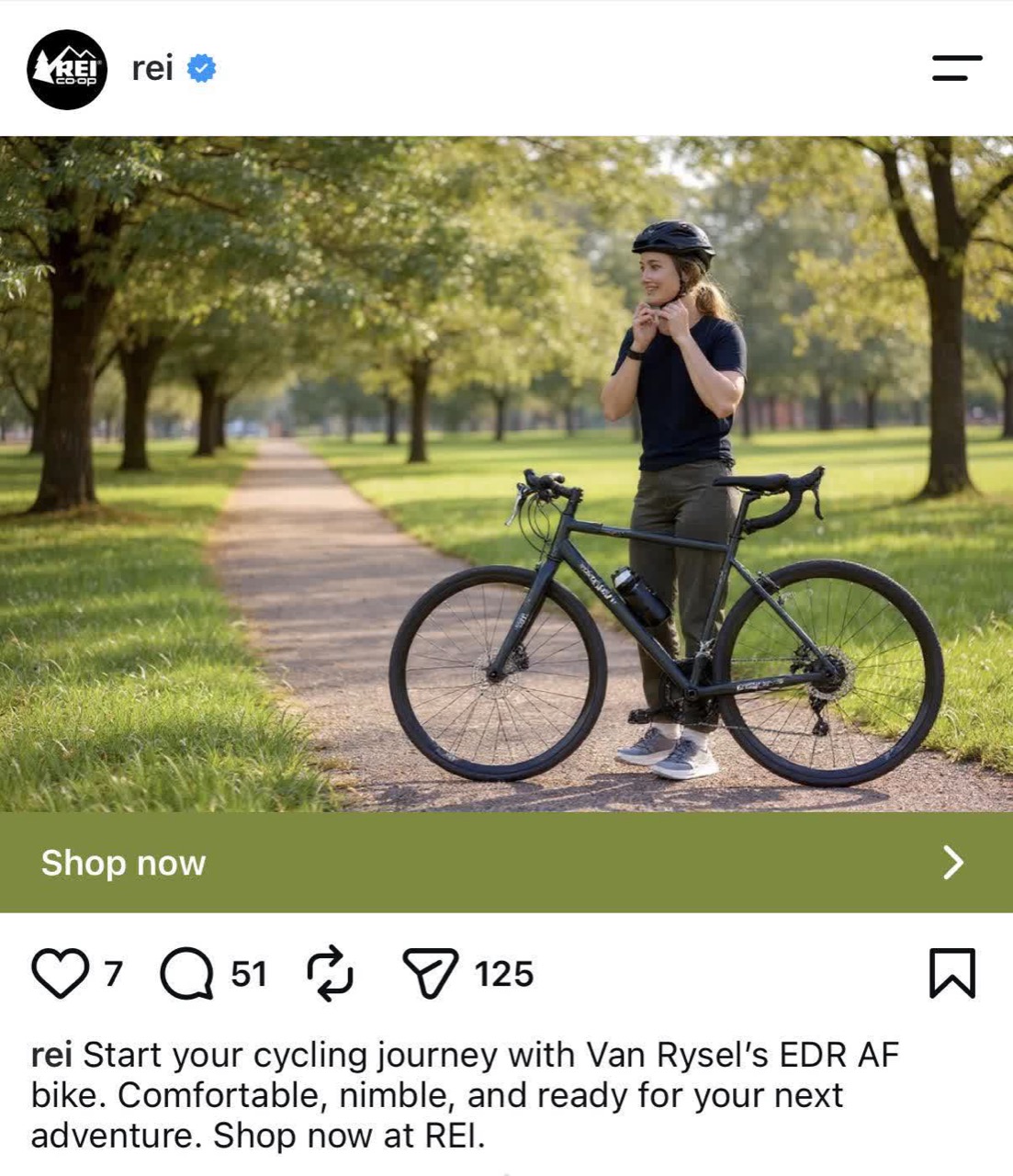
Meta's image enhancement rebuilt a vendor photo with a second set of handlebars, a missing crank arm and brakes on the wrong side. REI says Meta auto-enrolled it.
Screenshot of the Instagram ad via TechSpot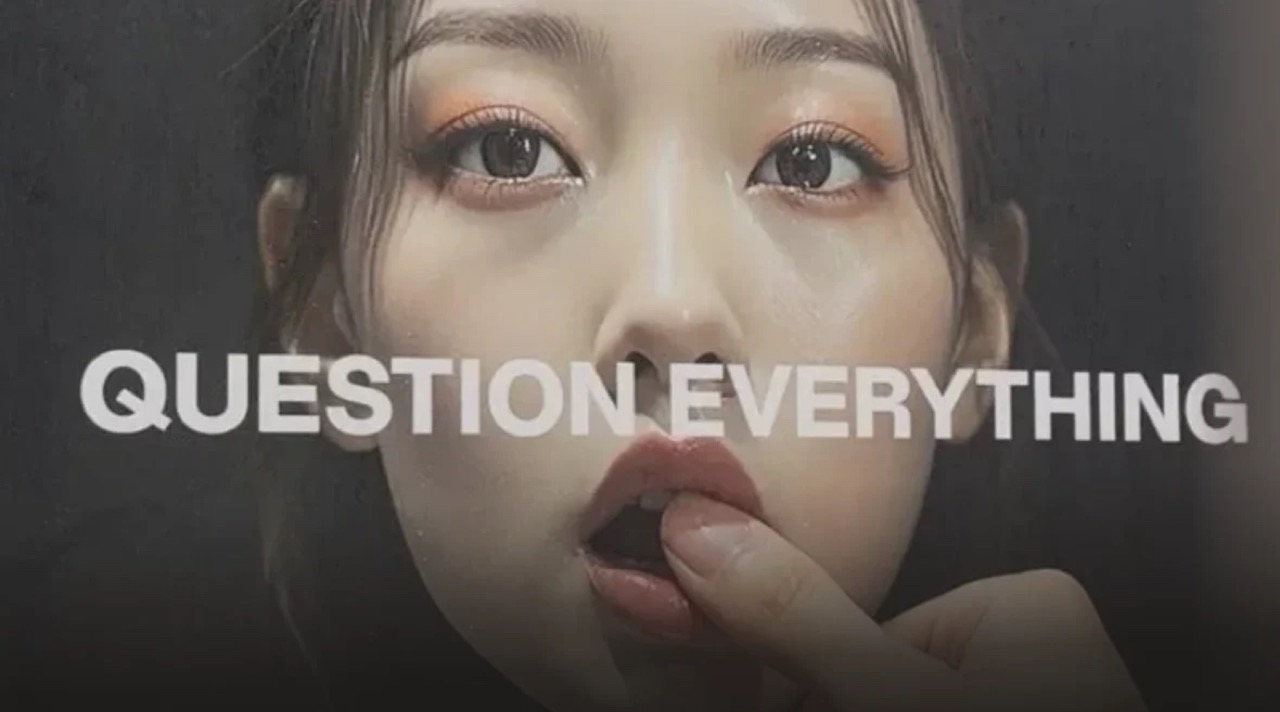
The AI-generated poster inside a campaign whose premise was real bodies versus AI fakery. Creators called it techno-orientalist; the brand accused a critic of manufacturing outrage, then pulled it.
Photo of the in-club poster via Athletech News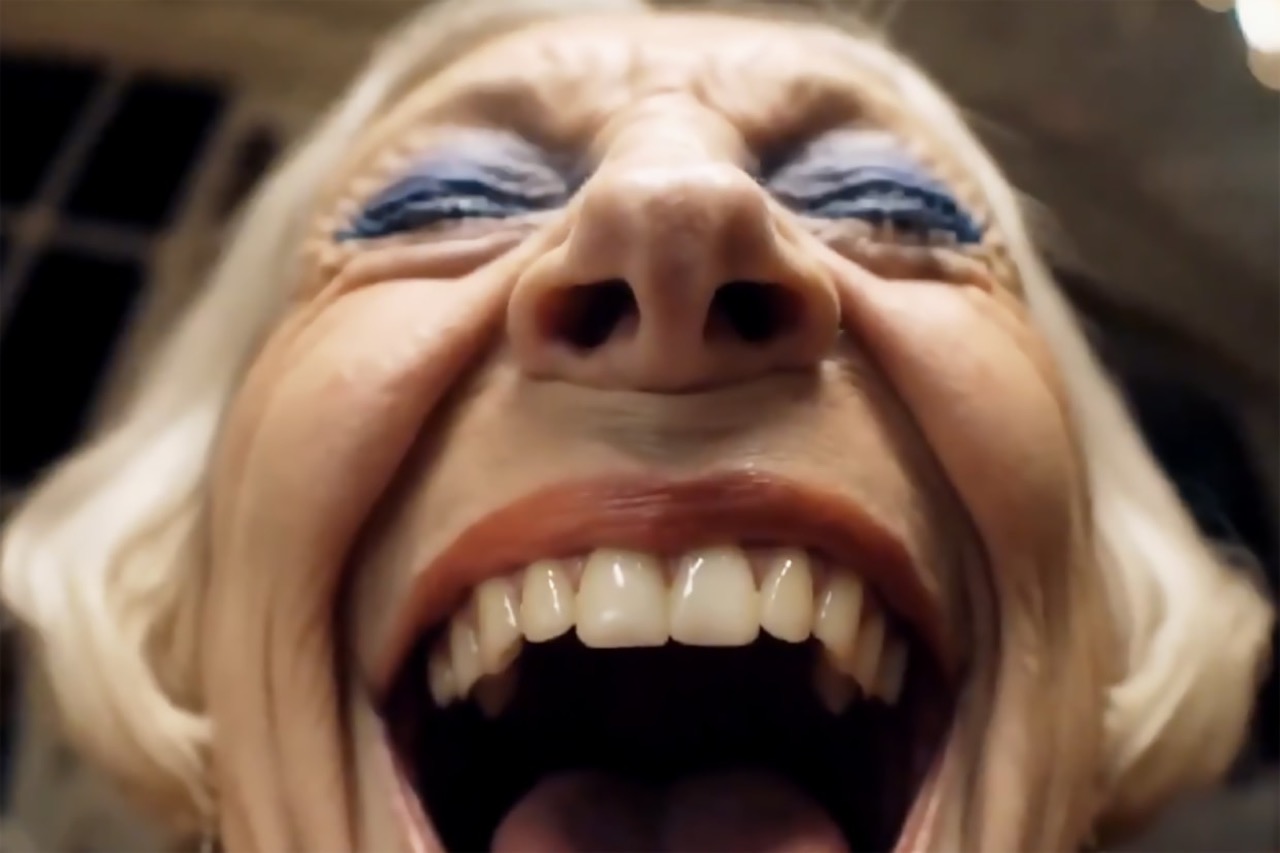
The 45-second AI holiday spot by TBWA\Neboko. Posted December 6, gone December 9, with an apology citing guest feedback.
Still via NBC News$137M
of AI-generated political ad spend in the 2026 midterms to October 16. 27% carried a disclaimer. Wesleyan Media Project.
Three traits run through the table, and none of them is a model failing technically.
First, the AI stood in for the proof. Samsung used generated footage to advertise a camera. A YouTube commenter put the whole tax in one line: "Looks like Samsung phones can't do that either; otherwise, Samsung would post real video instead of AI slop." Second, the platform generated it without consent. REI and True Classic never chose the ad that embarrassed them. Meta's automation did, and Meta buried the setting or let it reset itself. Third, the ad synthesized a human in a category where the audience polices humans: Valentino's models, Equinox's poster, and the political deepfakes that now carry $137 million.
What is new in 2026 is the absence of shame. Creative Bloq's Daniel John noticed it in February: "Neither Coca-Cola nor Samsung have shown any kind of remorse over producing slop – in fact, with small-print pointing out the use of AI adorning both brands' ads, what we're seeing looks more like pride." His cynical reading is probably the right one: brands have concluded "a brief period of angry online noise is worth it for the reduction in production time and shoot costs." The named pulls of the year were Equinox and REI, both images rather than films, and no major brand withdrew a fully AI-generated spot between August and mid-October. That is not the audience softening. IAB's year-over-year gap says it widened, and Gallup's May poll says it is hostile. It is the brands deciding the tax is payable.
Trust in AI imagery itself took a hit the same summer, when Google added a Nano Banana image tool to Google Earth on July 30 and rolled it back the next day after users fabricated disaster scenes at real coordinates.
The backlash was to an AI company's tone, not to AI imagery. The same company's human-made Super Bowl spots won the Film Grand Prix.
Video: Claude on YouTubeOne case belongs beside the table as a contrast. Anthropic's 90-second World Cup film "There's hope in hard questions", aired July 9, drew the comment "dystopian marketing slop" and a "tone-deaf" from The Atlantic. It was shot with cameras. The backlash was to an AI company's tone, not to AI imagery, and the same company's human-made Super Bowl spots won the Film Grand Prix. Audiences in 2026 can tell the difference between an ad about AI and an ad by AI, and they grade them separately.
The platform year: the AI moved into the buying tool
The ad platforms absorbed the standalone "AI ad generator" category in 2026, which means the generation now happens inside the account, sometimes without the advertiser asking.
Meta set the pace and is behind its own deadline. The Wall Street Journal had reported a goal of fully automated, end-to-end ad creation by the end of 2026. By April, Marketing Brew found buyers calling that "much further off," and Meta's Alisha Swinteck on the record that "advertisers are not penalized for opting out of AI features," with opt-out preferences saved from March. At Cannes on June 23 Meta showed Brand Memory, a model that learns a brand's identity and tone from its past ads before generating new ones, and an end-to-end creative workspace, both in limited testing.
+8.3%
ad clicks Meta credits to its GEM ranking model, with a 15.7% conversion uplift on Facebook. Meta's own Q2 call.
On July 7 Meta released Muse Image, the first image model from Meta Superintelligence Labs, promising "high-quality, on-brand ad variations with fewer iterations" inside Advantage+. On the Q2 call the company credited its GEM ads-ranking model (Meta's "Generative Ads Model") with an 8.3% increase in ad clicks and a 15.7% uplift in conversions on Facebook. A small-business case Meta named on the call, an Indian apparel brand called Underneat, got +13% incremental purchases from Advantage+ automation of audiences, placements, and budgets, not from generated creative. Brand Memory concedes the point: the platform that generates the most ads on earth has decided the fix for off-brand output is to lock generation to what the brand already approved.
Google's year ran through Google Marketing Live on May 20. Asset Studio now bundles Gemini, Veo, and Nano Banana with natural-language briefing and one-click creative testing, and Dynamic Search Ads were scheduled to auto-upgrade to AI Max in September whether the advertiser wanted it or not. The lift numbers Google showed on stage, Lufthansa at +24% ROAS and IKEA at +65% non-brand clicks on AI Max, are Google's own case studies, and so is Meta's $4.13 of revenue per dollar across a million campaigns. Every platform now publishes a number for its automation and none publishes the methodology.
TikTok World Canada on October 7 added Seedance 2.5 to Symphony, "Reference to Video" for pinning exact product images to moments, Smart+ Auto Selection that pools creator, product, and generated creative and picks winners itself, and an Ads server built on the Model Context Protocol (MCP) for agents. Advertisers posted screenshots in July of a "generate ads for you" option inside ChatGPT Ads Manager, which OpenAI has not announced, and OpenAI began testing visual ads inside image generation on October 5.
For an operator the implication is procedural rather than strategic. The ad that runs under your name may now be one you never saw. REI's two-handlebar bike and True Classic's armchair grandmother were both platform outputs, and a March 2026 ruling in Bouck v. Meta held that Section 230 does not shield Meta when its own tools "literally generated" the ad. The platform may carry some of the liability. The brand carries all of the screenshot. Audit the automation settings in every account quarterly. The Advantage+ guide walks the toggles that matter.
Sora died and images got cheap
6 mo
from Sora 2's launch to the shutdown notice. API customers got six months; app users got one.
The year's loudest model story was a shutdown. OpenAI announced on March 24 that the Sora app would close on April 26 and the API on September 24, six months after Sora 2 launched. Appfigures put the app's peak at 3.33 million downloads in November 2025 and 1.13 million by February. Any brand that built a 2025 video pipeline on it had one month to get off the app and six to leave the API. OpenAI then doubled its image bet instead: GPT-Image-2 on April 21 and GPT-Image-2.5 Flare and Sunburst on September 8, with Flare pitched at 50% lower latency than its predecessor.
Google shipped on a schedule. Nano Banana 2 (Gemini 3.1 Flash Image) previewed February 26, reached general availability May 28, and got a 2.1 update on October 6 with better subject consistency. Gemini Omni Flash became the default video model across Gemini and YouTube Shorts in May. No Veo 4 exists, Runway is still on Gen-4.5 with a multi-model router added in July, Adobe Firefly opened custom models in March, and Midjourney has announced no second video model.
Capital followed the platforms, not the tools. The standalone AI ad-tool category raised in 2026 where it touched enterprise video (Synthesia, $200 million at a $4 billion valuation in January; Mirage, $75 million in March) and agents (Melius, $20 million in October). No 2026 round for Creatify, Arcads, or HeyGen surfaced in our search. Icon, the "AI admaker" that spent $12 million on its domain, was reported shut in March without an announcement. When Meta, Google, TikTok, Amazon, and OpenAI all generate the ad inside the buying tool for free, "we generate ads from a prompt" stopped being a company.
Three things follow. Static image generation is now a commodity with three credible vendors, and the quality bar that produced Samsung's cobblestones is a direction problem, not a model problem. The production tests in Nano Banana 2 for ads and GPT Image 2 for ads cover where each model still fails on packaging text and reflective products, and the best AI image model for ads ranks them. Vendor longevity became a line item. And the indemnity picture is uneven:
- Google's indemnified-services list (updated July 20, 2026) covers Imagen and Veo output on paid services only and excludes trademark claims.
- OpenAI indemnifies API and Enterprise customers with similar carve-outs.
- Adobe's indemnity requires an enterprise entitlement.
- Meta's ad creative AI terms offer none, make the advertiser responsible for output, and restrict that output to Meta's own platforms.
Pick the image model by its failure rate on your packaging text, and keep the reference files, not the vendor, as the asset.
The volume year: more at the top, less below
Variation production won again in 2026, and the power law that rewards it got steeper.
60.7%
of gaming video spend went to the top 2% of creatives by Q2 2026, up from 53.5% a year earlier. AppsFlyer.
AppsFlyer's 2026 State of Creative Optimization (1.2 million creative variations, 1,400 apps) measured the top tier of gaming advertisers, those spending $7 million-plus a quarter, at 3,977 variations per app per quarter in Q1 2026, up 45% year over year. The equivalent non-gaming tier produced 3,477, up 47%. Below $1 million a quarter, output flattened or fell: down 10% in the $500,000-to-$1 million tier and down 20% at the bottom. Spend concentration followed. The top 2% of gaming video creatives absorbed 60.7% of spend by Q2 2026, up from 53.5% in Q1 2025, and the top 10% took more than three quarters in every vertical. AppsFlyer's Adam Smart, in its January gaming report, named the condition: "The result is not a shortage of creativity, but a surplus of it."
Motion's Creative Benchmarks 2026 is the operator-side anchor: $1.29 billion of Meta spend, 578,750 creatives, 6,015 accounts, September 2025 through January 2026. Roughly 5% of creatives qualify as winners and take 55% of spend, rising from 23% in micro accounts to 64% in enterprise ones. Weekly testing volume runs 2.8 creatives for accounts under $10,000 a month, 4.1 small, 6.6 medium, 11.2 large, 18.8 at $1 million-plus. The top quartile in each tier ships 4.8, 8.0, 15.9, 31.1, and 54.6 a week, 1.7 to 2.9 times the tier median, and lands two to three times as many winners a month. Hit rate barely moves across tiers, 4.0% to 8.8%. Volume is the lever, hit rate is not, and volume is what AI tooling sells.
- Tier median
- Top quartile
Source: Motion Creative Benchmarks 2026, $1.29B of Meta spend, 578,750 creatives, 6,015 accounts, Sept 2025 to Jan 2026. Top-quartile accounts ship 1.7 to 2.9 times the median and land two to three times the winners; hit rate barely moves (4.0% to 8.8%).
Motion's asset-type data adds one detail. The formats with the highest hit rates were text-only and product-image-with-text statics, the cheapest things in the account to make and the easiest to vary from a reference. Static versus video covers where each format earns its spend.
The practitioners who sell volume disagree about how to make it. Savannah Sanchez's agency ships 200-plus Meta ads a week across roughly 50 brands, and her stated position, on a Motion panel last October, is "I don't use AI in my ad creative production process," on the grounds that "one good ad is worth a thousand bad AI ads." Dara Denney's question to creators drafting with language models, in June, was "Do you have an original thought?" Everyday Dose's Travis Eubanks, on a Motion panel in July, admitted "I don't think anyone really knows what's the right way to use [AI]." Harry's Daniel Rivera, on the same panel, said where it belongs: "use your AI, it's backward facing." Rivera's point is the one the data supports: AI for variation on what already worked.
The sameness risk has a number now. Smartly found three in four marketers worried that AI creative makes brands look and sound the same, and 86% had already seen AI output that resembled a competitor's. When the top 2% of creatives take 47% to 61% of spend depending on format, average output does not fail loudly. It lands in the long, cheap, ignored tail. The way out is the testing discipline in creative testing, not more generation.
The rules year: AI advertising disclosure law
Disclosure of AI in advertising moved from guidance to statute in 2026: New York's General Business Law §396-b on June 9 and the EU AI Act's Article 50 on August 2, with UK enforcement starting in a third.
- Jun 9, 2026
New York GBL §396-b in force: conspicuous disclosure of synthetic performers, $1,000 then $5,000 per violation.
- Jun 10
European Commission publishes its Code of Practice on marking and labeling AI-generated content.
- Jun 18
UK ASA guidance: AI-made ads face the same rules as any ad.
- Jul 9
Google Ads adds an AI-label setting across Google Ads, DV360 and Merchant Center, citing New York by name.
- Jul 27
EU Digital Omnibus in force: high-risk deadlines pushed, Article 50 untouched.
- Aug 2
EU AI Act Article 50 applies; California's AI Transparency Act becomes operative for providers.
- Sep 16
ASA bans five AI-app ads on Meta found by its own AI monitoring.
- Dec 2
EU grace period ends for machine-readable marking by generative systems already on the market.
$1K / $5K
New York's penalty for an undisclosed synthetic performer: $1,000 for a first violation, $5,000 for each one after.
New York. General Business Law §396-b took effect June 9, 2026. Anyone producing an ad for a commercial purpose "shall conspicuously disclose in such advertisement that a synthetic performer is in such advertisement, where such person has actual knowledge," at $1,000 for a first violation and $5,000 for each subsequent one.
A synthetic performer is an AI-created asset meant to look like a human performer who is not an identifiable real person. The statute names no enforcer, creates no private right of action, and leaves "conspicuously" undefined. Law firms expect the Attorney General to use existing deceptive-practice powers.
As of October 2026 there is no guidance, no reported enforcement action, and no amendment. The platforms moved anyway. Google's July 9 policy update added an AI-label setting across Google Ads, DV360, and Merchant Center and cites New York by name, and Amazon told sellers in July to tag images with photorealistic AI people using a contains-synthetic-performer keyword. The companion Fashion Workers Act has required a model's separate written consent before any digital replica since June 2025.
€15M or 3%
The Article 99 fine ceiling for a transparency breach under the EU AI Act: €15 million or 3% of worldwide turnover, whichever is higher.
European Union. Article 50 of the AI Act applied on August 2, 2026, as scheduled. The Digital Omnibus (Regulation 2026/1744, in force July 27) postponed the high-risk deadlines and left Article 50 alone, granting only a December 2, 2026 grace period for machine-readable marking by generative systems already on the market. The deployer duty to label deepfakes, which is the advertiser's duty, had no grace. The Commission published its Code of Practice on transparency of AI-generated content on June 10 and guidelines on July 20. The deepfake test is objective, "plausibly real" is enough, and intent is irrelevant. The fine ceiling under Article 99 is €15 million or 3% of worldwide turnover, whichever is higher.
United Kingdom. The Advertising Standards Authority issued guidance in June that AI-made ads face the same rules as any ad, then on September 16 banned five AI-app ads on Meta for sexualizing women, including one who appeared to be a minor. The ASA's own AI monitoring system found them, not complaints. Several advertisers never responded.
Other US states. California's AI Transparency Act became operative on August 2, 2026, but its duties (detection tools, latent disclosures) fall on the model providers, not advertisers. Texas's Responsible AI Governance Act (January 1) and Colorado's rewritten AI law (2027) govern government, healthcare, and consequential decisions, not ad creative. New York is the only state with a disclosure duty on the ad itself that we could verify.
United States, federal. The FTC's 2026 record targets AI claims, not AI creative: Air AI (an $18 million judgment, mostly suspended, plus a marketing ban) and Cox Media Group's "Active Listening" ($930,000 across three firms, final August 27). The 2024 fake-reviews rule still makes an AI avatar scripted as a satisfied customer a fake testimonial. No federal rule requires labeling an ordinary AI-generated product image.
Platforms. Meta shows an "AI info" label when a photorealistic AI human appears, auto-applies it to ads built with its own tools, and from June 1, 2026 detects third-party AI in ad media automatically. TikTok's April 2026 policy is disclosure or rejection: "If we identify AI-generated content that has not been disclosed, your ad will be rejected or restricted." Google permits in-creative AI labels and may auto-apply them to assets its tools generated. It does not mandate them.
2026 left one contradiction unresolved. The best performance data says the only AI tax is visible AI. The law now says make AI visible wherever a synthetic human appears, and Gallup says 62% of Americans find the practice unacceptable even when disclosed. Politics ran the natural experiment: with disclosure legally encouraged and reputationally loaded, 27% of AI-generated midterm ads carried one. For a commercial advertiser the exit is the same one the data pointed at before the laws arrived. Produce creative that does not read as AI, and leave synthetic humans out of it so there is nothing to disclose. Where a layout borrows from a competitor, a different body of law applies, and is it legal to clone an ad covers that one.
Human-made became a feature
The other side of the price is that "no AI" became a positioning.
10,000+
applications in two weeks to Aerie's no-AI creator program. The brand reports a 23% sales lift from its authenticity messaging, self-reported.
Aerie formalized a "100% Aerie Real" pledge in October 2025, adding "No AI-generated bodies or people" and fronting it with Pamela Anderson under the line "You can't prompt this." The brand reports a 23% sales lift in late 2025 from its authenticity messaging, a self-reported figure. Its no-AI creator program, Aerie Realmakers, drew more than 10,000 applications in two weeks in May. Jen Foyle, president and executive creative director of American Eagle and Aerie, told Fortune: "Aerie Real was just celebrating women for who they are, and so now we are going to go to the next level with it." Fortune's framing of the year: the divide over AI is "between business leaders, who are all in, and the rest of the population."
Pamela Anderson tries to prompt a model, gives up, and walks onto a real shoot. "You can't prompt this."
Video: Aerie on YouTubeThe Jonas Brothers sit through an AI-generated pitch and reject it. Adweek's January tally of brands advertising the absence of AI starts here.
Video: Blue Diamond Almonds on YouTubeReal players, real fans, Susan Boyle. Topped System1's ranking of 2026 World Cup ads without a sponsorship.
Video: irnbru on YouTubeOther brands took the same position. Adweek's January tally of brands advertising the absence of AI included Almond Breeze's "The Pitch, No AI Needed" with the Jonas Brothers and Equinox's New Year portraits, inside the same campaign whose AI poster was pulled six months later. CNN had already called 2026 "the year of anti-AI marketing" in December, citing iHeartMedia's "guaranteed human" audio. The pattern reached politics, where a Texas Senate ad now ends with a "Made by humans" tagline.
70%
of agencies have not changed pricing despite AI speed-ups. D&AD, 197 creative leaders, August 2026.
It reached the scoreboards too. Irn-Bru's human-made "Made in Scotland from Girders" topped System1's ranking of 2026 World Cup ads among UK consumers without a sponsorship. The most awarded piece of "AI advertising" in 2026, Claude's Film Grand Prix, was human-made advertising about AI restraint. And agencies are selling human-made as a premium: D&AD's August report, The Cost of the Shortcut, surveyed 197 creative leaders and found 70% of agencies have not changed pricing despite the speed-ups. For now the market is paying it.
How to use AI in advertising without paying the slop tax
Strip the year down and the advertisers who used AI in advertising without paying the slop tax did five things, none of which depended on which model they ran.
They anchored on something proven. The winners in the two-year catalog started from a reference the brand already owned or an ad that had already worked, and let the model vary it. The losers started from a text prompt and a hope. Half of Samsung's problem was asking a model to invent proof of a camera. The Columbia finding says an ad that looks like every other good ad in the feed pays nothing, and the fastest way to look like one is to start from one. The research step is the cheap part: the best ad libraries and Meta's Ad Library hold the references, and recreating a winning static ad with your own product is the method.
They locked the brand as a system, not a prompt. The Mondelez, Publicis, and Accenture tool cut production cost 30% to 50% (self-reported, via Mobile Dev Memo) because brand assets sat in front of the model, not in a sentence to it. Meta building Brand Memory is the largest ad platform on earth conceding the same point. Brands with the most defensible 2026 output were not the ones using the most AI. They were the ones who locked their visual system tightly enough that AI could not drift it. The Liquid Death teardown and the Glossier teardown show what such a system looks like.
They produced volume at the concept level and bounded the variants. Motion's top-quartile accounts ship 1.7 to 2.9 times the tier median and land two to three times the winners. The configuration worth copying is 10 concepts at two to four variants each, not one concept at 40 variations. It is the one that survives a power law handing the top 2% of creatives up to 61% of spend.
They kept a human gate in front of spend. REI, True Classic, and Samsung are what no gate looks like. The gate does not need to be a creative director. It needs to be a person who sees the ad before the platform does.
They left synthetic humans out where the audience polices them. Valentino's models, Equinox's poster, Guess's AI-generated models in Vogue, and the $137 million of political deepfakes all synthesized a person. Product imagery with no human in it falls outside New York's law, outside the EU deepfake duty, outside Meta's label, and outside the one thing audiences reliably punish.
250 of 267
advertisers made their first AdDogs ad as an exact clone of a reference. None started from a blank prompt. Jan 2 to Oct 17, 2026.
Inside AdDogs the same five moves show up as behavior rather than advice. Of the 267 advertisers who completed at least one ad between January 2 and October 17, 2026, with the founder's own account and seeded samples excluded, 250 made their first ad as an exact clone of a reference ad, 17 made it from a reference used as inspiration, and none made it from a blank prompt. Five tried blank-prompt mode later. 87% of those advertisers applied their extracted brand colors at least once. Across all 697 generations, 57% used a reference the advertiser uploaded themselves and 43% picked one from the 14,000+ ad examples in the library.
This is observed behavior inside one product whose primary flow is cloning, not a market survey, and the corpus says nothing about downstream performance. One advertiser produced 82 of the 697. It still says something useful: handed a generator that can start from nothing, 267 practitioners chose, almost without exception, to start from something that had already worked.
The reference-clone way to do this. AdDogs starts every ad from a reference: pick one of 14,000+ real ad examples or upload the one you want to beat, add your product photo, and the AI rebuilds the layout around your product in seconds, with your colors and logo extracted automatically. 1 credit = 1 ad in the dimension you pick. Pro and Ultimate unlock all 14 aspect-ratio options. Plans at $12/mo, $33/mo, and $63/mo. Browse the ad examples · See plans · How the static ad generator works
2027: what is already on the calendar
Dates first.
- Oct 21, 2026 (expected)
Coca-Cola's Q3 call. The 2026 holiday campaign is unannounced as of this writing. Whether the brand runs AI a third year is the creative decision this report checks first.
- Nov to Dec 2026
Collins, Oxford, and Merriam-Webster publish 2026 words of the year. "Slop" won 2025 at Merriam-Webster and "AI slop" at Macquarie. The shortlists will say whether the term peaked.
- Nov 15, 2026
Payments begin in the Bartz v. Anthropic $1.5 billion settlement, currently about $2,204 net per work. The final $450 million tranche is due by September 2027.
- Nov 20, 2026
Summary-judgment briefing closes in NYT v. OpenAI, with a ruling expected in 2027. Disney, Universal, and Warner Bros. v. Midjourney has no merits ruling, with mediation due to complete in August and no outcome reported.
- Dec 2, 2026
The EU marking grace period ends for generative systems that were on the market before August 2.
- Early 2027
Meta's "fully automated" ad-creation goal, due by the end of 2026 and by buyers' account not close, carries over, along with Muse Video, announced for "a later date." Google's forced migration of Dynamic Search Ads to AI Max, scheduled for September 2026, should be done. TikTok's agentic stack ships with its MCP server already live.
- Jun 2027
Cannes Lions runs under the same mandatory AI-disclosure and sign-off rules. The question is whether the 40% declaration rate rises or entries fall again.
- Any time
Another Sora. The one model vendor that shut down a flagship product in 2026 gave its API customers six months. Plan every pipeline for the vendor leaving.
How we built this report
We cataloged every public "state of AI in advertising" report, consumer survey, platform announcement, model release, court docket, and regulator page dated January 1 to October 19, 2026, ranked by source tier (A: primary data, official documents, peer-reviewed research; B: reputable trade press; C: single or vendor sources, used with attribution; D: never cited), and re-verified every number carried over from our 2025 research against a live source. Vendor-reported figures say so in the sentence. What we could not verify, disclosed: the Harris Poll and Canva sample sizes were never published; the NYU/Emory impression count cannot be re-fetched; no public dataset segments AI-creative performance by advertiser size. Keyword volumes are DataForSEO, US, October 2026. The AdDogs corpus was queried on October 19, 2026 (completed generations, seeded samples and the founder's account excluded) and proves behavior, not performance.
FAQ
Is it illegal to use AI in advertising?
No. Using AI to make an ad is legal in the US, UK, and EU. Disclosure is what the law regulates. Since June 9, 2026, New York requires a conspicuous disclosure whenever an ad contains an AI-generated human performer, at $1,000 for a first violation and $5,000 after. Since August 2, 2026, the EU AI Act's Article 50 requires deployers to label deepfakes, with fines up to €15 million or 3% of worldwide turnover. The FTC bans AI-generated fake reviews and testimonials. Product imagery with no synthetic person in it falls outside all three. Cloning a competitor's layout is a separate question, answered in is it legal to clone an ad.
Why did Coca-Cola use an AI ad?
Speed and cost, by the company's own account: its CMO, Manolo Arroyo, told Euronews the AI production cut the timeline from a year to a month, and its head of generative AI said the craft was "ten times better" than 2024. The results split. CARMA measured positive sentiment falling from 23.8% to 10.2%; System1 scored it a maximum 5.9 stars; Sensor Tower's estimates put spend up 110% and impressions up 91%. The company has published no sales lift, and as of October 19, 2026 it had not said whether a third AI holiday ad is coming.
What is AI slop in advertising?
AI slop is low-quality AI-generated content produced in quantity, and in advertising it means an ad the audience identifies as machine-made: warped hands and objects, incidental text as letter-shaped noise, characters drifting between shots, or footage standing in for proof, as in Samsung's AI-generated camera teasers. Merriam-Webster made "slop" its 2025 word of the year. In 2026 it became tooling: LinkedIn's report button drew a million clicks in three weeks, and DoubleVerify counted 500 million-plus ad impressions on slop sites in the first half of the year. Ads that read as AI lose. Ads that pass do not.
How many advertisers use AI in advertising in 2026?
Most ads touch AI somewhere and a minority are made by it. 83% of ad executives say their company uses AI in the creative process. Advertiser Perceptions found 38% use AI to build an entire creative asset and only a quarter use it for all assets. 40% of Cannes Lions entries declared AI use in 2026, up from 11% in 2024. On the consumer side, Gallup found 79% of Americans had seen an ad in the past 30 days that looked AI-made.
Does disclosing AI in an ad hurt performance?
Yes, in every measurement published so far. Telling viewers an ad was AI-made cut click-through by 31.5% in a Google Display field experiment, and Gallup found 62% of Americans call AI-made advertising unacceptable even when it is clearly disclosed. The penalty is perception rather than provenance: across 500 million Taboola impressions, undisclosed AI ads the audience did not notice performed on par with human ads. On the biggest stage, the one AI-generated Super Bowl LX ad scored 43% below the median, and in Ipsos's matched-pair test human ads were 14% stronger on short-term sales effect even though only 25% of viewers spotted the AI ones. The AI-generated ads study walks through that disclosure evidence case by case.
Which AI tool is best for advertising?
It depends on the job, and in 2026 the ad platforms absorbed most of the generation: Meta's Advantage+ with Muse Image and Brand Memory, Google's Asset Studio, TikTok's Symphony. For reference-anchored static ads, AdDogs clones a proven layout with your product and brand. For blank-prompt generation, the ranked comparisons are in the best AI ad generators and the best AI ad creative generators; for the underlying image models, the best AI image model for ads. Whatever the tool, audit its automation settings before it spends.
Do you have to disclose AI in advertising?
Only in specific cases. New York requires it for AI-generated human performers; the EU requires deepfake labels; TikTok rejects undisclosed AI content; Meta auto-labels ads made with its own tools and detects third-party AI from June 2026; Google permits labels but does not mandate them for ordinary commercial ads. Disclosure does not rescue the ad with consumers: Gallup found 62% call AI-made advertising unacceptable even when clearly disclosed, and in the 2026 midterms only 27% of AI-generated political ads carried one.
What were the worst AI ads of 2026?
By measured outcome: Svedka's Super Bowl spot (rank 60 of 66 on EDO), Samsung's Galaxy S26 teasers (AI footage advertising a camera, no pull, no apology), REI's Meta-altered two-handlebar bike (removed in June), and Equinox's AI poster (pulled with an apology in July). Carried over from the 2025 holidays: McDonald's Netherlands (pulled in four days) and Coca-Cola's second AI Christmas ad (positive sentiment down 13.6 points). The audience caught every one of them. No model failed to render.